
Top Affordable Cities in Colombia, Ecuador, Mexico, Guatemala, and Chile
So, In determining where I’d want to retire, I felt it would be good to look at central and South American cities where Americans are not currently focusing. Many American retirees are finding that their savings stretch much further in these Latin American cities. Places like Medellín, Cuenca, Guadalajara, Antigua, and Valparaíso offer a lower cost of living while still providing modern healthcare, stable infrastructure, and welcoming expat communities.

Retirees can often cut their monthly expenses by 30% to 50% by relocating to these cities, making retirement savings last longer while maintaining or improving their quality of life. Housing costs drop dramatically compared to most U.S. cities. Healthcare remains affordable and accessible. Daily expenses like food, transportation, and entertainment cost a fraction of what Americans pay at home.
This guide walks through the practical details of retiring in five top Latin American destinations. It covers visa requirements, healthcare options, tax considerations, and what daily life looks like for American retirees in each city. The information helps retirees make informed decisions about whether moving abroad fits their retirement plans.
How Moving Abroad Can Boost American Retiree Savings
American retirees can reduce their monthly expenses by 30% to 50% in Latin American cities while accessing quality healthcare and modern amenities. These savings come from lower housing costs, reduced medical expenses, and cheaper everyday living costs.
Financial Benefits of Retiring Overseas
Housing costs drop significantly in Latin American cities compared to most U.S. locations. A one-bedroom apartment in Medellín’s upscale neighborhoods rents for $500 to $800 monthly, while similar quality housing in U.S. cities costs $1,500 to $3,000. Cuenca offers even lower prices, with comfortable apartments available for $400 to $600 per month.
Healthcare expenses become more manageable abroad. Doctor visits in these countries typically cost $25 to $40 without insurance, compared to $150 to $300 in the United States. Many retirees purchase private health insurance for $100 to $200 monthly, which covers most medical needs. Prescription medications cost 50% to 70% less than U.S. prices.
Daily expenses like groceries, dining out, and transportation consume less of a retiree’s budget. A couple can eat well on $300 to $500 monthly for groceries and enjoy restaurant meals for $8 to $15 per person. Public transportation in cities like Medellín costs under $1 per ride, eliminating car ownership expenses.
Comparing Cost of Living With the United States
| Expense Category | U.S. Average Monthly | Latin America Average Monthly |
|---|---|---|
| Housing (1-bed) | $1,800 | $600 |
| Healthcare | $500 | $150 |
| Groceries | $400 | $250 |
| Utilities | $200 | $80 |
| Transportation | $300 | $100 |
A retired couple living on $3,000 monthly Social Security income faces tight budgets in most U.S. cities. The same income provides comfortable living in Medellín, Cuenca, Guadalajara, Antigua, or Valparaíso/Viña del Mar. These cities offer modern infrastructure, reliable internet, and active expat communities.
Guadalajara combines affordable living with big-city amenities at prices 40% lower than comparable U.S. cities. Antigua provides colonial charm with monthly living costs around $1,500 to $2,000 for a couple. Valparaíso and Viña del Mar offer coastal living for roughly half the cost of California beach towns.
Key Lifestyle Improvements for Retirees
Warmer climates in these Latin American cities eliminate heating costs and reduce weather-related health issues. Year-round mild temperatures encourage outdoor activities and social engagement. Retirees spend more time walking, exploring, and participating in community events.
Access to fresh, locally-grown produce improves diet quality while costing less. Markets sell fruits, vegetables, and meats at prices 60% below U.S. supermarkets. The slower pace of life reduces stress and creates more opportunities for hobbies and relationships.
Strong expat communities exist in each of these cities, providing social networks and practical support. English-speaking doctors, dentists, and service providers cater to foreign retirees. Many locals speak some English, though learning basic Spanish enhances the experience. Cultural activities like concerts, museums, and festivals cost $5 to $15 for admission, making entertainment accessible on fixed incomes.
Top Latin American Retirement Cities for Americans
These five cities stand out as retirement destinations where American retirees can significantly reduce their living costs while enjoying quality healthcare, pleasant climates, and welcoming expat communities. Each location offers unique advantages, from colonial architecture to coastal views, with monthly budgets typically ranging from $1,500 to $2,500 per person.
Medellín, Colombia: The City of Eternal Spring
Medellín has transformed into one of Latin America’s most attractive retirement destinations. The city sits at 5,000 feet elevation, creating year-round temperatures between 60°F and 80°F.
A couple can live comfortably on $2,000 to $2,500 monthly. This budget covers rent, utilities, groceries, dining out, and entertainment. Healthcare costs remain notably low, with doctor visits averaging $30 without insurance and comprehensive health insurance plans starting at $100 per month.
The El Poblado neighborhood attracts most American retirees. This area features modern apartments, restaurants, shopping centers, and English-speaking services. Public transportation includes a metro system and cable cars that cost less than $1 per ride.
Colombia offers a special visa for retirees who can prove monthly income of at least $750. The visa process is straightforward and grants residency status. Medellín has a growing expat community with social groups, language exchanges, and cultural activities.
Cuenca, Ecuador: Affordable Colonial Charm
Cuenca ranks among the most affordable retirement destinations in Latin America. A single retiree can live well on $1,500 to $1,800 monthly, while couples typically spend $2,000 to $2,300.
The city’s historic center is a UNESCO World Heritage site filled with colonial churches, cobblestone streets, and traditional markets. The climate stays mild year-round due to the high-altitude location. Temperatures hover between 50°F and 70°F throughout the year.
Healthcare quality in Cuenca meets international standards. Many doctors trained in the United States or Europe practice in the city. A specialist visit costs around $40, and comprehensive health insurance runs approximately $150 monthly for retirees.
Monthly Cost Breakdown for Cuenca:
| Expense | Cost Range |
|---|---|
| Rent (1-bedroom apartment) | $300-$500 |
| Utilities | $40-$60 |
| Groceries | $250-$350 |
| Dining out (15 meals) | $75-$150 |
| Transportation | $20-$40 |
Ecuador uses the U.S. dollar as official currency. This eliminates exchange rate concerns for American retirees.
Guadalajara, Mexico: Urban Life and Culture
Guadalajara provides big-city amenities at a fraction of U.S. costs. The city is Mexico’s second-largest metropolitan area and birthplace of mariachi music and tequila.
Monthly expenses for a comfortable lifestyle range from $2,000 to $2,800 for a couple. The Providencia and Zapopan neighborhoods offer modern infrastructure, security, and proximity to shopping centers and hospitals. These areas have become popular with expat retirees.
Healthcare in Guadalajara rivals many U.S. facilities in quality. The city has several internationally accredited hospitals. Many doctors speak English and charge $35 to $50 per consultation. Prescription medications cost 50-70% less than in the United States.
Mexico’s temporary resident visa requires proof of monthly income around $2,000 or bank savings of approximately $32,000. After four years of temporary residency, retirees can apply for permanent resident status. The proximity to the United States makes visiting family easier, with direct flights to major U.S. cities taking 3-4 hours.
Antigua, Guatemala: History and Community
Antigua offers the lowest cost of living among these retirement destinations. A single person can live comfortably on $1,200 to $1,500 monthly, while couples need $1,800 to $2,200.
This colonial city sits surrounded by volcanoes and coffee plantations. The Spanish colonial architecture remains well-preserved throughout the compact city center. Most locations are walkable, reducing transportation costs.
The expat community in Antigua is particularly tight-knit. English is widely spoken in restaurants, shops, and medical facilities that cater to foreigners. Spanish language schools are abundant and affordable, with intensive courses costing $150-$200 per week including homestay accommodation.
Guatemala’s pensionado visa requires proof of $1,000 monthly income from a pension or retirement account. The application process takes 2-3 months. Healthcare costs remain minimal, with private doctor visits around $25 and dental work at 60-70% less than U.S. prices.
The climate varies by season. Dry season runs November through April with warm days and cool nights. Rainy season brings afternoon showers from May through October.
Valparaíso and Viña del Mar, Chile: Coastal Living
These twin coastal cities offer ocean views and a more temperate climate than other Latin American retirement destinations. Valparaíso features colorful hillside homes and a bohemian artistic community. Viña del Mar provides beaches, gardens, and a more polished urban environment.
Monthly costs run higher than other Latin American options at $2,200 to $3,000 for a couple. Chile’s economy is more developed, which translates to higher prices but also greater stability.
The public healthcare system in Chile ranks as one of Latin America’s best. Private health insurance costs $150-$250 monthly for retirees. English-speaking doctors are common in private clinics.
Chile offers a retirement visa for those with guaranteed monthly income of approximately $1,500. The country uses the Chilean peso, which can fluctuate against the dollar. Both cities have established expat communities, though smaller than those in Mexico or Ecuador.
The coastal location provides seafood at excellent prices. The climate remains mild year-round, with temperatures between 55°F and 75°F. The cities sit just 90 minutes from Santiago’s international airport.
Saving in Medellín: Why Colombia Leads for U.S. Retirees

Medellín offers American retirees one of the lowest costs of living in Latin America while maintaining modern infrastructure and quality healthcare. The city provides monthly expenses under $2,500 for a comfortable lifestyle, accessible private medical care, and straightforward visa requirements for foreign retirees.
Cost of Living in Colombia
A single retiree can live comfortably in Medellín on $1,500 to $2,000 per month, including rent, utilities, food, and entertainment. A modern one-bedroom apartment in a safe neighborhood costs between $400 and $700 monthly. Two-bedroom units in popular expat areas run $600 to $1,000.
Daily expenses remain low compared to U.S. prices. A meal at a local restaurant costs $4 to $8, while groceries for one person typically run $200 to $300 monthly. Transportation stays affordable with metro rides at $0.70 and taxi trips across the city rarely exceeding $10.
Other Colombian cities offer similar savings. Bogotá costs slightly more due to its capital status, while Pereira, Bucaramanga, and Santa Marta provide even lower expenses. Cartagena’s coastal location makes it pricier but still cheaper than most U.S. cities.
The Colombian minimum wage sits at approximately $350 per month, which helps keep service costs low. Housekeeping runs $15 to $25 per day, and many retirees hire part-time help for cooking or cleaning at rates under $300 monthly.
Healthcare in Colombia for Expats
Colombia’s private healthcare system ranks among the best in Latin America. Major hospitals in Medellín meet international accreditation standards and employ English-speaking staff. Doctor visits cost $30 to $50 without insurance, while specialist appointments run $50 to $80.
Private health insurance for retirees aged 65-75 costs $150 to $300 monthly with comprehensive coverage. Many policies include dental and vision care. Prescription medications cost 60-80% less than U.S. prices, with many common drugs available without prescriptions.
Medical procedures cost a fraction of U.S. rates. A knee replacement runs $8,000 to $12,000, compared to $30,000 or more in America. Dental implants cost $800 to $1,200 each. Wait times for procedures remain short, typically days or weeks rather than months.
Understanding the Colombian Retirement Visa
The Colombian retirement visa requires proof of a monthly pension or retirement income of at least $1,000 (approximately three times the Colombian minimum wage). Applicants submit documents to Migración Colombia, the country’s immigration authority. The process takes two to three months on average.
Required documents include a valid passport, FBI background check, proof of pension income, and health insurance coverage. All foreign documents need apostille certification and official translation into Spanish. The visa grants three-year residency with renewal options.
After five years of legal residency, retirees can apply for permanent residence. The Colombian retirement visa allows holders to import household goods tax-free and grants the same healthcare access as citizens. Visa holders cannot work for Colombian companies but can receive foreign income without restriction.
Retirement Visa and Legal Requirements by Country
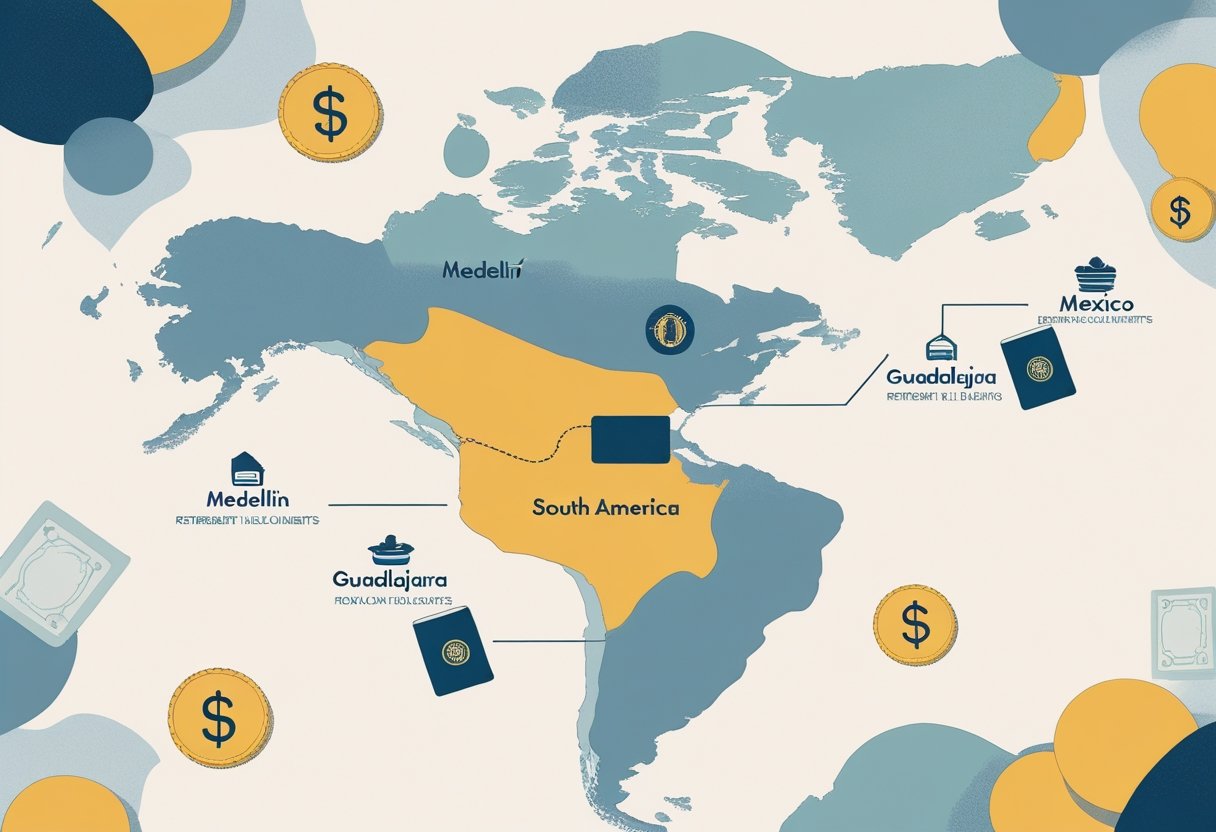
Each of these five Latin American countries offers distinct pathways for American retirees to obtain legal residency, with varying income requirements and documentation processes. Colombia, Ecuador, Mexico, Guatemala, and Chile all maintain specific retirement visa categories, though the application procedures and minimum income thresholds differ significantly.
Visa Processes for Colombia, Ecuador, Mexico, Guatemala, and Chile
Colombia requires retirees to apply for an M-type visa (Pensionado) through Migración Colombia. The Colombian retirement visa mandates proof of monthly pension income of approximately $750-$1,000 from Social Security or a private retirement fund. The visa initially grants one year of residency, renewable for up to five years before permanent residency eligibility.
Ecuador offers a pensioner visa requiring around $1,350 monthly income. Applicants must apply through an Ecuadorian consulate in the U.S. or in-country after entering on a tourist visa.
Mexico provides a temporary resident visa for retirees with minimum monthly income of approximately $3,100 or savings of $52,000. After four years, retirees can apply for permanent residency.
Guatemala grants retirement visas to those showing $1,000 monthly pension income. The process is handled through the immigration department in Guatemala City.
Chile requires approximately $1,500 monthly pension income for its temporary residency visa, which can lead to permanent residency after one year.
Required Documentation and Legal Steps
All five countries require similar core documents: a valid passport, birth certificate, police clearance certificate, and proof of pension or retirement income. Documents must be apostilled in the United States before submission.
Retirees need to provide bank statements showing regular pension deposits, typically covering the previous 3-6 months. Health insurance coverage is mandatory in Colombia, Ecuador, and Chile, though Mexico and Guatemala have more flexible requirements.
Application steps include submitting documents to the relevant immigration authority, paying application fees ranging from $200-$500, and attending an in-person interview. Most countries require applicants to maintain their income levels throughout their residency period. Background checks and medical examinations are standard across all five nations.
Accessing Quality Healthcare as a Foreign Retiree
American retirees in these Latin American cities can access both public and private healthcare systems, though most expats choose private care for shorter wait times and English-speaking staff. Insurance requirements vary by country, and medical facilities tend to concentrate in urban centers.
Public Versus Private Healthcare Options
Most American retirees in Colombia, Ecuador, Mexico, Guatemala, and Chile opt for private healthcare over public systems. Private hospitals in Medellín, Cuenca, Guadalajara, and Viña del Mar offer modern facilities with doctors trained in the U.S. or Europe. Many physicians speak English, which helps retirees navigate appointments and treatment plans.
Healthcare in Colombia provides a good example of the dual system. The public system requires contributions through employment or residency, but wait times can be long. Private care costs a fraction of U.S. prices—a doctor’s visit typically runs $30-50 without insurance.
Public healthcare access depends on visa status and residency requirements. In Mexico, retirees with temporary or permanent residency can enroll in IMSS (Mexican Social Security) or INSABI. Ecuador’s public system is available to residents, though many expats prefer private clinics in Cuenca for routine care.
Health Insurance Requirements and Portability
Medicare does not cover healthcare outside the United States except in limited emergency situations. Retirees need international health insurance or local policies to cover medical expenses abroad.
Many countries require proof of health insurance for residency visas. Ecuador mandates coverage for visa applicants, while Mexico requests evidence of financial solvency or insurance. Guatemala and Chile have different requirements based on visa type.
International policies from companies like Cigna Global or Allianz offer worldwide coverage with direct billing at major hospitals. Local insurance plans cost less—typically $50-150 per month depending on age and coverage level. These policies work well for retirees who plan to stay in one country long-term.
Some retirees maintain catastrophic international coverage while paying out-of-pocket for routine care. A specialist visit rarely exceeds $70, and prescription medications cost 50-80% less than U.S. prices.
Access in Smaller Cities and Rural Areas
Medical facilities concentrate in the five cities mentioned, with Medellín and Guadalajara offering the most advanced care. These larger cities have multiple private hospitals with specialized departments and emergency services.
Cuenca, Antigua, and Valparaíso have fewer options but still maintain quality private clinics for general medicine and common procedures. Serious conditions may require travel to larger medical centers in Quito, Guatemala City, or Santiago.
Rural areas outside these cities have limited healthcare infrastructure. Retirees living in smaller towns should stay within a few hours of major medical facilities. Many expats schedule regular checkups when visiting larger cities or plan medical tourism trips for non-emergency procedures.
English-speaking doctors are common in expat-heavy neighborhoods but less available in rural clinics.
Taxes, Banking, and Financial Considerations
American retirees must understand U.S. tax obligations continue regardless of where they live, while new host country tax rules also apply. Banking access and money management require advance planning to avoid complications.
Taxes on U.S. Pension and Social Security Abroad
The United States taxes its citizens on worldwide income no matter where they live. Retirees must still file annual U.S. tax returns and report all income sources, including pensions, Social Security benefits, and investment earnings.
Social Security benefits may be partially taxable depending on total income levels. Up to 85% of benefits can be taxed if combined income exceeds certain thresholds. Retirees should note that moving abroad does not eliminate these federal tax obligations.
The Foreign Earned Income Exclusion does not apply to retirement income. However, retirees can claim the Foreign Tax Credit if they pay income taxes to their host country. This credit helps prevent double taxation on the same income.
Tax Residency Rules in Colombia and Other Countries
Each Latin American country has different rules for determining tax residency. In Colombia, individuals become tax residents after staying 183 days in a calendar year or when their primary economic ties are in the country. Tax residents must pay Colombian income tax on worldwide income, though rates vary by income level.
Mexico uses similar 183-day rules for tax residency. Ecuador and Chile also follow comparable time-based criteria. Guatemala offers more favorable treatment, as it primarily taxes only income earned within the country.
Many retirees can structure their time to avoid becoming tax residents. They can split months between countries or return to the U.S. periodically. Tax treaties between the U.S. and Chile help clarify residency questions, though such treaties do not exist with the other four countries mentioned.
Opening Bank Accounts and Managing Finances
U.S. retirees can maintain their American bank accounts while living abroad. Most major banks allow account holders to keep accounts active with a foreign address. Direct deposit of Social Security and pension payments continues without interruption.
Opening local bank accounts in host countries often requires specific documents. These typically include a passport, proof of address, and sometimes a residency visa. Requirements vary by country and individual banks.
Retirees must report foreign bank accounts to the U.S. government if balances exceed $10,000 at any point during the year. The Foreign Bank Account Report (FBAR) filing is mandatory. Banks also report account information to the IRS under FATCA rules.
Using U.S.-based investment accounts remains possible from abroad. However, some brokerage firms restrict services for clients with foreign addresses. Retirees should confirm their financial institutions’ policies before relocating.
Community, Integration, and Security Abroad
American retirees in Latin America find established expat networks that ease the transition to a new country. Safety varies significantly between neighborhoods and cities, making research essential before choosing where to live.
Building a Social Circle as an American Retiree
Each of these Latin American cities hosts active expat communities that welcome newcomers. Medellín features regular meetups in the Poblado and Laureles neighborhoods where English speakers gather at cafes and cultural events. Cuenca’s large American population organizes weekly activities through groups like the Cuenca Expats Community.
Guadalajara offers language exchange programs and volunteer opportunities that help retirees connect with both locals and fellow expats. The city’s artistic scene attracts creative professionals and retirees who share interests in music and culture.
Antigua draws retirees to its Spanish language schools, which serve as natural meeting points for foreigners. Many students stay for months, creating lasting friendships while learning the language.
Valparaíso and Viña del Mar have smaller but growing expat populations. Retirees here often join walking groups, art classes, and Chilean cooking workshops to meet people.
Common ways to build connections:
- Spanish language classes
- Expat Facebook groups and forums
- Volunteer work with local organizations
- Sports clubs and fitness groups
- Cultural events and festivals
Safety and Security in Popular Latin American Cities
Safety levels differ greatly by neighborhood within each city. Cuenca and Antigua rank among the safest options, with low violent crime rates in their historic centers. Retirees report feeling comfortable walking during daylight hours in tourist areas.
Medellín has improved its security dramatically over the past two decades. The Poblado, Envigado, and Laureles districts where most expats live maintain strong police presence. Petty theft remains the main concern rather than violent crime.
Guadalajara’s wealthier neighborhoods like Providencia and Chapalita offer security comparable to American suburbs. Retirees should avoid certain areas after dark and stay aware of their surroundings.
Valparaíso requires more caution due to its hilly layout and economic disparities. Viña del Mar next door provides a safer alternative with beach access and better infrastructure.
Basic security practices apply everywhere:
- Use registered taxis or rideshare apps
- Keep valuable items out of sight
- Learn basic Spanish for emergencies
- Get local advice on areas to avoid