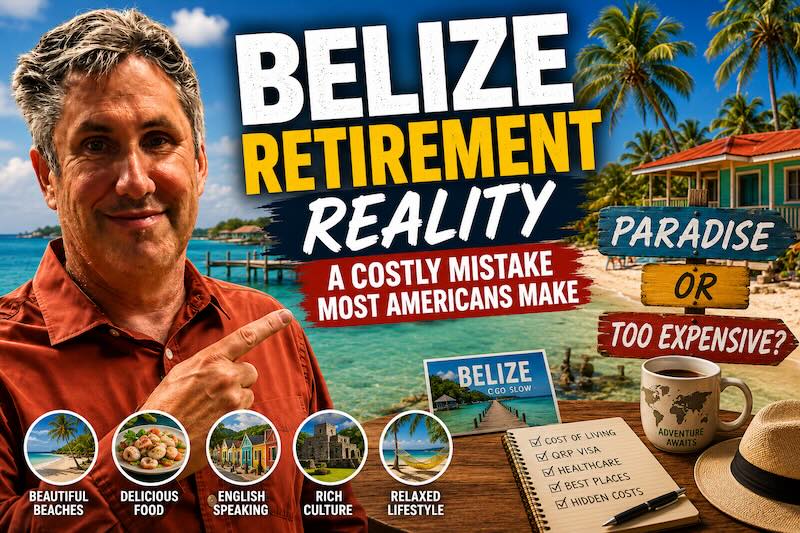
There are some places you visit that stay with you long after you return home. Belize became one of those places for me.
When my wife and I visited Belize in 2022, I quickly understood why so many Americans dream about retiring there. The people were incredibly welcoming, the food was fresh and flavorful, and for once I didn’t have to struggle through conversations in another language. I’ve traveled to various Spanish-speaking countries, and am decent at speaking Spanish, but it isn’t my strong suit. Since English is the official language of Belize, everything from ordering dinner to chatting with locals felt comfortable and familiar.
Of course, the scenery didn’t hurt either.
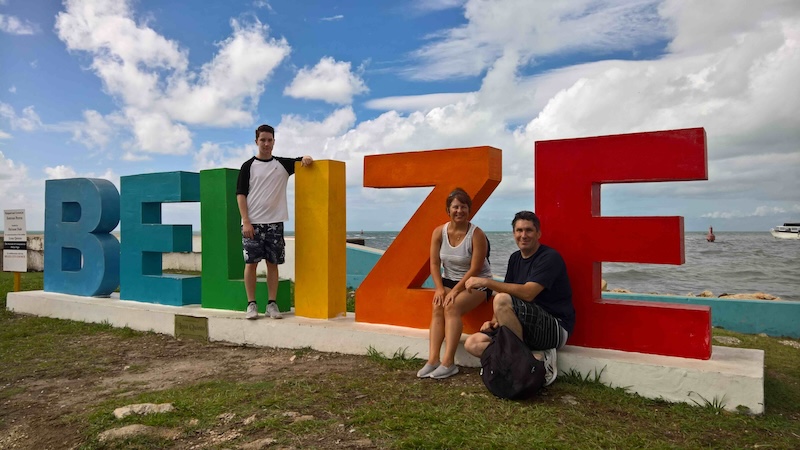
That photo was taken at the famous Belize Sign right on the boardwalk in Belize City. It’s hard not to fall in love with turquoise Caribbean water, swaying palm trees, colorful towns, and a slower pace of life. After just a few days, I found myself thinking what many retirees think:
“Could I actually live here?”
It’s a question I hear frequently on my YouTube channel, Retire Without Borders, and one that deserves a closer look. In fact, I created a deep dive into living in Belize as an American retiree. You can check it out here:
Belize has built a reputation as one of the easiest countries for Americans to relocate to. It’s only a short flight from the United States, uses English as its official language, has a well-known retirement residency program, and offers a tropical lifestyle that feels like a permanent vacation.
But here’s where many retirees make a costly mistake.
They confuse vacation Belize with everyday Belize.
It’s easy to spend a week relaxing at a beachfront resort, enjoying fresh seafood, and imagining that retirement will simply be an extended version of that vacation. The reality is a little more complicated. I think about this everytime I venture to a new country. I wonder what the climate is like during the months I’m not there. I wonder about the administrative hassles. I wonder how accepting the locals are to Americans moving in. Sure, spending a week or two at a beautiful resort or condo is enticing. But what about the rest of the time? Of course, I also have a guide to “test driving” a country before moving there permanently. I recommend you take a look at that informative video:
Don’t get me wrong – Belize can absolutely be a wonderful place to retire. For the right person, it offers an incredible quality of life. But it isn’t the bargain paradise it once was. Housing costs have climbed in popular areas, imported goods are surprisingly expensive, electricity bills can catch newcomers off guard, and healthcare often requires more planning than many Americans expect.
None of these are reasons to cross Belize off your retirement list.
They’re simply reasons to do your homework before making one of the biggest financial decisions of your life.
That’s exactly what this guide is designed to help you do.
In this article, I’ll walk you through what it’s really like to retire in Belize, including the actual cost of living, the Qualified Retired Persons (QRP) Program, healthcare, weather, the best places to retire, and—perhaps most importantly—the hidden expenses that catch so many Americans by surprise.
If you’re considering retiring abroad, Belize deserves a serious look. Just make sure you’re looking at the complete picture—not just the postcard version.
Let’s start with why Belize continues to attract thousands of American retirees every year.
Moving to Belize: Why Many Americans Are Choosing It
If you’ve watched my channel for any length of time, you know I encourage people to look beyond the obvious retirement destinations. Sometimes the places that receive the least attention end up offering the best lifestyle.
Belize isn’t exactly a secret anymore, but compared to Mexico, Costa Rica, or Portugal, it still flies under the radar for many Americans.
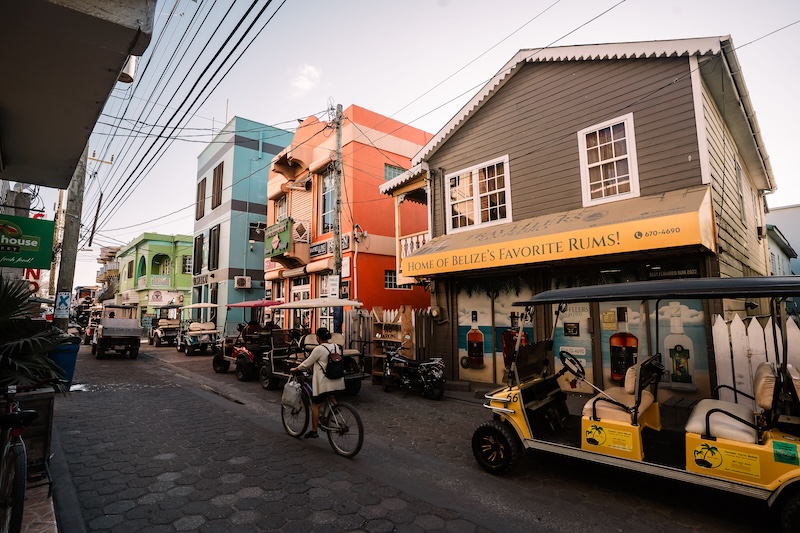
Once you visit, it’s easy to understand the appeal.
For starters, Belize feels remarkably familiar despite being located in Central America. Unlike nearly every surrounding country, English is the official language, making everyday life much easier for American retirees. Government offices, legal documents, banking, healthcare providers, and most businesses operate in English. That removes one of the biggest barriers many people worry about when considering retirement overseas.
Then there’s the proximity to home.
Depending on where you live in the United States, Belize is often just a few hours away by plane. That means visiting family—or having family visit you—is considerably easier than if you retired in Europe or Southeast Asia. Many retirees appreciate knowing they can return to the U.S. without spending an entire day in airports or dealing with multiple international connections.
Another attraction is the lifestyle itself.
Life tends to move at a slower pace in Belize. People generally aren’t rushing from one appointment to another, and there’s a stronger emphasis on enjoying the moment. Whether you’re strolling along the beach in Placencia, watching fishing boats return at sunset in Corozal, or enjoying a quiet afternoon at a neighborhood café, life often feels less stressful than many Americans have grown accustomed to.
Nature also plays a major role.
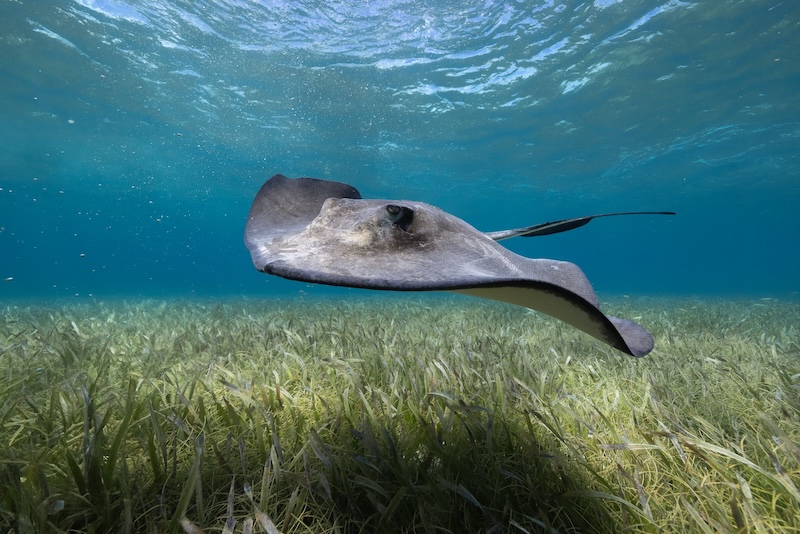
Belize offers one of the most diverse environments in the Caribbean region. You can spend one weekend snorkeling along the Belize Barrier Reef—the second-largest barrier reef in the world—and the next hiking through lush rainforests filled with waterfalls, caves, and ancient Mayan ruins. If retirement means finally having time to enjoy the outdoors, Belize delivers in a big way. I absolutely loved snorkeling in the warm Caribbean waters. They are teeming with life and so warm compared to the Pacific Ocean off of California.
Many retirees also appreciate the country’s relatively stable government, use of the Belize dollar (which has been pegged at two Belize dollars to one U.S. dollar for decades), and legal system based on British Common Law. These factors provide a sense of familiarity and predictability that can make an international move feel less intimidating.
Of course, Belize isn’t perfect.
Like every retirement destination I’ve covered, it comes with trade-offs.
Some infrastructure can be inconsistent outside the larger towns. Roads vary in quality, internet service depends on where you live, and imported goods often carry premium prices. Certain beach communities have become significantly more expensive than they were just a decade ago.
That’s why I always encourage people to spend several weeks—or even a few months—in a country before making any permanent decisions.
Vacation mode has a funny way of hiding everyday realities.
When you’re on vacation, you’re focused on beaches, restaurants, and sunsets.
When you’re retired somewhere, you’re thinking about grocery shopping, paying utility bills, finding a dentist, scheduling doctor’s appointments, renewing residency paperwork, and deciding whether the cost of air conditioning is worth running all afternoon in August.
Those practical realities don’t make Belize a bad retirement destination.
They simply mean it’s important to understand exactly what you’re signing up for.
The good news is that one of Belize’s greatest advantages remains something many Americans worry about before moving abroad: communication. Unlike many retirement destinations in Latin America, you can build a comfortable life here without becoming fluent in another language.
But does that mean learning Spanish isn’t worth your time?
That’s what we’ll explore next.
Do I Need to Learn Spanish?
One of the first questions I hear from Americans considering retirement abroad is:
“Do I need to learn another language?”
In most of the countries I’ve covered here on KaiPonte.com and on my YouTube channel, the answer is usually yes—at least enough to get by comfortably.
Belize is one of the few exceptions.
Unlike neighboring Mexico and Guatemala, English is the official language of Belize. That means road signs, government offices, legal documents, newspapers, television broadcasts, banks, and most businesses all operate in English. For many American retirees, that’s one of Belize’s biggest selling points.
When my wife and I visited in 2022, it was something I noticed almost immediately. We could walk into a restaurant, ask questions about the menu, chat with hotel staff, or strike up conversations with locals without worrying about language barriers. It made the entire experience feel far less intimidating than many first-time visitors expect.
For retirees who may be nervous about moving overseas, that’s a huge advantage.
It also makes everyday life much simpler once you’ve settled in. Whether you’re opening a bank account, purchasing property, visiting a doctor, or dealing with government paperwork, being able to communicate clearly removes a tremendous amount of stress.
That doesn’t mean you’ll hear only English.
Belize is an incredibly diverse country, and you’ll also hear Belizean Creole (often called Kriol), Spanish, Garifuna, and several Mayan languages depending on where you travel.
In northern Belize, especially near Corozal and Orange Walk, Spanish is spoken frequently because of the country’s close ties with neighboring Mexico. Likewise, if you decide to make regular shopping trips across the border into Mexico—which many retirees do—you’ll quickly find that knowing some basic Spanish can be incredibly useful.
Even learning a handful of common phrases can make daily interactions easier and help you connect more deeply with your neighbors.
I’ve always believed that making an effort to learn the local language—even if you don’t absolutely need it—is simply a sign of respect. You don’t have to become fluent overnight. But greeting someone in their language or ordering a meal without relying entirely on English often goes a long way toward building relationships.
Fortunately, Belize gives you the luxury of learning at your own pace.
You can comfortably retire there while gradually picking up Spanish over time instead of feeling pressured to master it before you arrive.
For many Americans, that peace of mind alone makes Belize one of the easiest countries to transition into.
Of course, speaking the language is only one part of the retirement equation.
The bigger question is whether you can actually afford the lifestyle once you get there.
And that’s where Belize begins to surprise many people.
Cost of Living: Is Belize Really Affordable?
If you’ve watched enough retirement videos online, you’ve probably heard someone say that you can retire anywhere in Central America for a fraction of what you’d spend in the United States.
Like many sweeping statements, there’s some truth to it—but it doesn’t tell the whole story.
Belize is affordable compared to many parts of the United States, but it’s no longer the bargain destination it was twenty years ago. In fact, depending on where you choose to live, Belize can actually cost more than some popular retirement destinations in Mexico, Ecuador, or Colombia.
That’s the reality many retirees don’t discover until after they’ve moved.
The biggest factor is location.
If your dream is waking up every morning to the Caribbean Sea in places like Ambergris Caye or Placencia, expect to pay a premium. These communities have become increasingly popular with both retirees and vacation-home buyers, pushing housing prices steadily upward over the past decade.
On the other hand, inland communities such as San Ignacio or northern towns like Corozal remain considerably more affordable while still offering excellent quality of life.
Housing
Housing will almost certainly be your largest monthly expense.
A modest apartment in an inland community can often be rented for significantly less than an equivalent property on the coast. Meanwhile, beachfront condos and homes in tourist destinations may command prices comparable to what you’d pay in desirable areas of Florida or coastal South Carolina.
Buying property follows the same pattern.
Belize places relatively few restrictions on foreign ownership, which has made real estate attractive to Americans and Canadians alike. That’s good news if you’re looking to purchase a home, but increased international demand has also pushed prices higher in many desirable areas.
My advice is simple:
Don’t buy immediately.
Rent for six months—or even a year—before making a purchase. You’ll learn far more about neighborhoods, seasonal weather, traffic, and daily life than you ever could during a two-week vacation.
Groceries
Food costs are another area where expectations and reality sometimes collide.
The good news is that Belize produces wonderful fresh fruits, vegetables, seafood, poultry, and locally grown products. Shopping at neighborhood markets can be surprisingly affordable, especially if you’re willing to cook at home and adapt your eating habits to what’s locally available.
The expensive part comes when you try to recreate your American shopping cart.
Many packaged foods, imported snacks, specialty ingredients, wine, cheese, and name-brand products are imported. By the time they arrive on store shelves, they’ve accumulated shipping costs, import duties, and distributor markups.
You might find yourself paying two or three times what you’d spend back home for products you once considered ordinary.
Many successful expats eventually adjust their diets rather than their budgets.
Fresh fish instead of frozen imported seafood.
Local produce instead of imported berries.
Belizean coffee instead of your favorite specialty brand.
It’s a small shift that can make a meaningful difference over the course of a year.
Utilities
Utilities are where many newcomers experience their first case of sticker shock.
Electricity in Belize is relatively expensive by North American standards, and if you’re planning to run air conditioning around the clock in a beachfront home, don’t be surprised when the monthly bill arrives.
The tropical climate means you’ll be using fans or air conditioning much of the year, particularly during the hotter and more humid months.
Many retirees reduce costs by choosing homes designed for natural ventilation, installing ceiling fans, and relying on air conditioning primarily at night.
Internet service has improved dramatically in recent years and is generally reliable in larger towns and expat communities. Water and trash collection are typically reasonable expenses, although availability can vary depending on your location.
Transportation
Transportation costs depend entirely on your lifestyle.
If you settle in a walkable community like Placencia or Caye Caulker, you may find yourself driving very little—or not at all.
On Ambergris Caye, golf carts often replace automobiles as the preferred mode of transportation.
If you choose to own a vehicle, however, keep in mind that imported cars can be expensive, and maintenance costs may be higher due to imported parts. Fuel prices also tend to run higher than what many Americans are accustomed to paying.
Some retirees discover that renting a car when necessary and relying on taxis or local transportation the rest of the time actually saves money.
So…How Much Do You Really Need?
Although everyone’s lifestyle is different, here’s a realistic picture of what many retirees can expect.
- Budget lifestyle: Around $1,800–$2,200 per month if you’re living inland, renting modestly, and keeping discretionary spending under control.
- Comfortable retirement: Approximately $2,500–$3,500 per month for a nice rental, regular dining out, reliable transportation, and occasional travel.
- Luxury Caribbean lifestyle: $4,500 per month and up, particularly if you’re living on Ambergris Caye or in a high-end beachfront community.
For many Americans, those numbers are still lower than retirement costs in expensive U.S. cities.
But they may also be higher than expected.
That’s why I always encourage people to compare Belize not only to where they live today, but also to other retirement destinations around the world. In many cases, you’ll find that Belize offers convenience and familiarity rather than the absolute lowest cost of living.
And if you’re seriously considering making the move, your next question is probably this:
Can Americans actually live in Belize long term?
Fortunately, Belize has one of the better-known retirement residency programs in the Caribbean. In the next section, we’ll take a closer look at the Qualified Retired Persons (QRP) Program, who qualifies, and whether it’s the right path for your retirement abroad.
The Qualified Retired Persons (QRP) Program: Belize’s Biggest Advantage for American Retirees
One of the reasons Belize consistently ranks near the top of retirement destination lists is that it has one of the most straightforward retirement residency programs in the Caribbean.
If you’ve watched some of my other videos or read my articles about countries like Portugal, Spain, or Thailand, you know that retirement visas can sometimes feel overwhelming. Income requirements, piles of paperwork, language barriers, and long processing times can make the process intimidating.
Belize takes a different approach.
Its Qualified Retired Persons (QRP) Program was specifically created to encourage foreign retirees to make Belize their home. If you meet the requirements, the process is relatively straightforward compared to many other countries. Travel Belize
Who Can Qualify?
As of today, you generally qualify for the QRP Program if you:
- Are 40 years of age or older
- Can demonstrate at least $2,000 USD per month (or $24,000 annually) in retirement or passive income from outside Belize
- Can satisfy the required documentation and security checks
- Agree to meet the program’s residency requirements each year Travel Belize
One thing I appreciate about Belize is that the qualifying income doesn’t have to come from just one source.
For many Americans, Social Security alone may satisfy the requirement. Others combine a pension, IRA withdrawals, investment income, annuities, rental income, or other retirement assets. The Belize Tourism Board recognizes several forms of legitimate retirement income. Belize Tourism Board
For many couples, this makes qualifying much easier than they initially expected.
What Are the Benefits?
The QRP Program offers several attractive incentives that have helped make Belize popular with retirees.
Among the biggest advantages are:
- Legal residency status under the program
- Tax advantages on qualifying foreign-source income
- The ability to import certain personal belongings with duty exemptions
- Favorable treatment when bringing a vehicle or boat into the country
- The ability to own property in Belize just like a local citizen Travel Belize
For Americans who have spent decades accumulating household furnishings, tools, or a favorite vehicle, those import benefits can represent meaningful savings.
Another feature many retirees appreciate is Belize’s currency.
The Belize dollar has long been pegged at two Belize dollars to one U.S. dollar, making exchange rates refreshingly simple. Unlike retirees living in countries with constantly fluctuating currencies, budgeting becomes much easier when you know exactly what your dollars are worth.
A Few Things to Keep in Mind
No residency program is perfect, and the QRP is no exception.
For example, the program is designed for retirees—not people looking to move to Belize and immediately start working for a local employer. While recent changes have expanded opportunities for investment under certain conditions, employment and business activities are still governed by specific rules. If your retirement plans include opening a business or generating local employment income, it’s worth speaking with an attorney or qualified immigration professional before making assumptions. Belize Tourism Board
I also encourage readers to remember that immigration rules can change.
Visa requirements, documentation, and fees are updated from time to time, so always verify the latest information through the Belize Tourism Board or other official government sources before beginning the application process.
For most retirees, however, the QRP remains one of Belize’s strongest selling points. Compared with many countries I’ve researched, the process is refreshingly straightforward.
But obtaining residency is only half the equation.
The next question I hear almost as often is this:
“What happens if I get sick?”
Healthcare is one of the biggest concerns for anyone retiring overseas—and it’s an area where Belize offers both reassurance and a few important realities you need to understand.
Healthcare in Belize: Good for Everyday Care, But Plan Ahead
Healthcare is one subject I never recommend glossing over.
When you’re in your twenties, access to hospitals probably isn’t high on your priority list. But as we move into retirement, quality medical care becomes one of the most important factors in deciding where to live.
The good news is that Belize has both public and private healthcare systems, and routine medical care is generally much less expensive than what many Americans are accustomed to paying.
A doctor’s visit that might cost hundreds of dollars in the United States can often cost a fraction of that in Belize, especially if you’re paying out of pocket.
That’s one reason many retirees speak positively about everyday healthcare there.
Private Healthcare Is Where Most Expats Go
Although Belize has a public healthcare system, most expatriates choose private clinics and hospitals whenever possible.
Private facilities generally offer:
- Shorter wait times
- English-speaking physicians
- Modern medical equipment
- More personalized care
During our visit, one thing that stood out to me was how approachable people were. That same friendliness extends to many healthcare providers, making visits feel less intimidating than you might expect in a foreign country.
For routine care—annual physicals, minor illnesses, prescriptions, and basic medical services—many retirees report having very positive experiences.
Specialized Care Can Be Limited
This is where it’s important to be realistic.
Belize is a country of fewer than half a million people.
Because of its size, it simply doesn’t have the same range of specialists, advanced hospitals, or cutting-edge medical facilities that you’ll find in larger countries.
If you require:
- Complex cardiac procedures
- Advanced cancer treatment
- Certain neurological specialties
- Organ transplants
- Highly specialized surgeries
there’s a good chance you’ll be referred elsewhere.
Many retirees travel to nearby Mexico—particularly the city of Chetumal, just across Belize’s northern border—for more advanced medical care. Others return to the United States for major procedures, especially if they already have Medicare coverage or long-standing relationships with specialists back home. Kiplinger
That isn’t necessarily a deal breaker.
In fact, it’s a strategy used by retirees in many countries around the world.
The key is planning for it before you actually need it.
Should You Buy Health Insurance?
In my opinion, yes.
Even if you’re generally healthy, retirement has a way of reminding us that unexpected medical issues can happen at any time.
Many expats purchase international health insurance that provides coverage both inside Belize and in neighboring countries where specialized care is available.
Others combine local private healthcare for everyday needs with periodic trips back to the United States for major medical appointments.
There isn’t a single right answer.
The best approach depends on:
- Your age
- Existing medical conditions
- Prescription medications
- Budget
- How often you expect to return to the United States
If you have a chronic medical condition, I strongly recommend spending time researching local specialists before choosing where you’ll live in Belize. Being close to quality medical care may end up being more important than having an ocean view.
My Take
Healthcare is one area where I think some retirement videos oversimplify things.
You’ll hear people say that Belize has “great healthcare.”
Others claim it’s inadequate.
The truth—as is often the case—falls somewhere in the middle.
For routine medical needs, Belize performs quite well, especially through its private healthcare system. Costs are generally reasonable, English is widely spoken, and most retirees find they receive attentive care.
For highly specialized treatment, however, it’s wise to have a backup plan.
Fortunately, Belize’s location makes that easier than in many retirement destinations. Mexico is just across the border, and the United States is only a relatively short flight away.
To me, that’s one of Belize’s biggest advantages.
You can enjoy a relaxed Caribbean lifestyle without feeling completely disconnected from world-class medical care when you truly need it.
Next, we’ll look at another factor that shapes everyday life in Belize: the tropical climate, hurricane season, and which parts of the country offer the best retirement lifestyle for different kinds of retirees.
Weather: Tropical Paradise Comes with Trade-Offs
If you’ve been dreaming about trading snow shovels for palm trees, Belize certainly makes a compelling case.
The weather is one of the country’s biggest attractions. Warm temperatures, sunshine, and Caribbean breezes are exactly what many retirees envision after decades of enduring cold winters in places like Michigan, Ohio, Pennsylvania, or New England.
During our visit in 2022, one of the things I enjoyed most was simply being outside. Whether we were walking through town, enjoying a meal overlooking the water, or exploring the local area, it felt like there was never a bad excuse to spend time outdoors.
That said, tropical weather isn’t just endless sunshine.
Like every retirement destination, Belize has its own seasonal patterns, and it’s worth understanding them before you decide where to live.
The Dry Season: Belize at Its Best
Generally speaking, the dry season runs from late November through May.
This is when you’ll experience:
- Warm daytime temperatures
- Lower humidity
- Plenty of sunshine
- Comfortable evenings
- Ideal beach weather
Not surprisingly, it’s also the busiest tourist season.
If you’re planning a scouting trip before retirement, I actually recommend visiting during this time. You’ll see Belize looking its best, but you’ll also experience the higher prices and increased activity that come with peak travel season.
Average daytime temperatures typically range from the upper 70s to the mid-80s Fahrenheit, depending on where you are.
For many Americans, it’s almost perfect.
The Rainy Season
Beginning around June, the weather changes noticeably.
Rain showers become more common, humidity increases, and afternoon thunderstorms are a regular part of life.
Now, don’t picture endless days of rain.
Much of the rainy season consists of bright mornings followed by a heavy shower later in the day before clearing again. In fact, the rain is one reason Belize remains so lush and green.
If you enjoy gardening, tropical plants, or simply waking up to vibrant landscapes, you’ll probably appreciate this time of year.
The downside is the humidity.
For retirees who aren’t accustomed to tropical climates, the combination of heat and moisture can take some getting used to. It’s also one reason electricity bills can climb quickly if you’re relying heavily on air conditioning.
Hurricane Season
This is the weather topic every prospective retiree should understand.
Belize sits within the Caribbean hurricane belt, meaning the official hurricane season runs from June through November, with the greatest activity typically occurring between August and October.
That doesn’t mean Belize experiences a major hurricane every year.
Far from it.
But it’s something you need to plan for just as someone retiring to Florida, coastal Texas, or the Carolinas would.
If you choose to purchase property in Belize, be sure to consider:
- Hurricane-resistant construction
- Appropriate homeowners insurance
- Emergency preparedness plans
- Backup power options
- Flood risk in your chosen neighborhood
One thing I appreciate about experienced expats is that they don’t panic about hurricane season—they prepare for it.
That’s a good philosophy no matter where you choose to retire.
Coastal vs. Inland Living
Another weather consideration that often gets overlooked is where you decide to settle.
Coastal communities tend to benefit from steady Caribbean breezes, making the heat feel more comfortable.
Inland areas can become warmer during the day but often cool off more at night, particularly around San Ignacio.
There’s really no universally “better” climate.
It comes down to personal preference.
Do you want to wake up to ocean views and sea breezes?
Or would you rather enjoy cooler evenings, rolling hills, and lower housing costs?
That’s one reason I always recommend spending time in several different parts of Belize before deciding where to put down roots.
Which brings us to another important question.
Where should you actually retire?
Fortunately, Belize offers several excellent choices, each with its own personality.
The Best Places to Retire in Belize
One of the things I like about Belize is that there isn’t just one obvious retirement destination.
Unlike some countries where nearly every expat ends up in the same city, Belize offers several communities that appeal to very different lifestyles.
Whether you’re dreaming of beachfront sunsets, small-town charm, or a quieter inland retreat, there’s probably a place that fits your vision of retirement.
Here are the communities I think deserve the closest look.
Placencia: My Favorite Beach Town
If someone asked me to picture the Caribbean retirement lifestyle, Placencia would probably be the image that comes to mind.
Located on a narrow peninsula in southern Belize, Placencia combines beautiful beaches with a relaxed atmosphere that feels more authentic than many heavily developed resort towns.
Life moves slowly here.
You’ll find waterfront restaurants, small cafés, local markets, fishing boats, and friendly neighbors who actually know each other.
One of my favorite aspects of Placencia is that it still feels like a real community rather than a destination built entirely for tourists.
The downside?
Popularity has driven prices upward.
Housing costs have increased considerably over the past decade, especially for beachfront property.
Still, for many retirees, the lifestyle makes the premium worthwhile.
Best for:
- Beach lovers
- Walkable communities
- Relaxed retirement
- Outdoor recreation
Corozal: Belize’s Budget-Friendly Retirement Haven
If affordability is your priority, Corozal deserves serious consideration.
Located in northern Belize near the Mexican border, Corozal has quietly become one of the country’s most popular retirement communities for Americans and Canadians.
Housing costs are generally lower than you’ll find on the Caribbean coast, and many retirees appreciate being only a short drive from Chetumal, Mexico.
That opens the door to additional shopping, restaurants, and healthcare options.
Corozal also has a well-established expat community, making it relatively easy to meet other retirees who’ve already navigated the transition.
For many people, it’s one of Belize’s best values.
Best for:
- Budget-conscious retirees
- Easy access to Mexico
- Quiet lifestyle
- Established expat community
Ambergris Caye: Caribbean Resort Living
Ambergris Caye is probably Belize’s best-known destination.
Home to San Pedro, it’s famous for crystal-clear water, diving, snorkeling, golf carts instead of cars, and a lively social scene.
If you’re looking for an active retirement filled with restaurants, beach bars, boating, and visitors from around the world, this could be your place.
It also has one of the largest expat populations in Belize.
However, all of that popularity comes at a price.
Real estate, groceries, restaurants, and everyday expenses tend to be among the highest in the country.
For retirees with larger budgets, Ambergris Caye can be paradise.
For those living primarily on Social Security, it may feel surprisingly expensive.
Best for:
- Active retirees
- Divers and boaters
- Luxury lifestyle
- Social atmosphere
San Ignacio: A Different Side of Belize
Not everyone dreams of retiring by the beach.
Some people would rather wake up surrounded by forests, rivers, wildlife, and ancient Mayan history.
If that sounds like you, San Ignacio deserves a look.
Located in western Belize near the Guatemalan border, San Ignacio offers a completely different retirement experience.
The pace is relaxed, the scenery is lush, and the cost of housing is generally lower than many coastal communities.
You’ll also find:
- Hiking trails
- Nature preserves
- Rivers
- Caves
- Mayan archaeological sites
It’s especially attractive for retirees who enjoy staying active and spending time outdoors.
Best for:
- Nature lovers
- Lower housing costs
- Cooler evenings
- Adventure seekers
Caye Caulker: Slow Down Even More
If you’ve ever heard the phrase “Go Slow,” you’ve already encountered the unofficial motto of Caye Caulker.
This tiny island takes relaxation seriously.
Cars are almost nonexistent.
Most people walk or ride bicycles.
Life revolves around the water.
It’s one of those places where schedules become suggestions rather than rules.
While services are more limited than on Ambergris Caye, many retirees appreciate exactly that.
It offers a peaceful lifestyle that feels worlds away from the constant rush many Americans leave behind.
Best for:
- Simplicity
- Walkability
- Island living
- Quiet retirement
Choosing the Right Community Matters More Than Choosing Belize
If there’s one lesson I’ve learned from researching retirement destinations around the world, it’s this:
The country you choose is only half the decision.
The city—or even the neighborhood—you choose often has a much bigger impact on your happiness.
I’ve spoken with retirees who absolutely love Belize.
I’ve also heard from a few who were disappointed.
More often than not, the difference wasn’t Belize itself.
It was that they chose a location that didn’t match their lifestyle or budget.
Someone looking for nightlife and restaurants may feel isolated in Corozal.
Someone hoping to stretch a modest retirement income might struggle with the costs on Ambergris Caye.
Someone who dreams of quiet nature may find San Ignacio perfect.
There isn’t one “best” place to retire in Belize.
There’s only the place that’s best for you.
Unfortunately, this is also where many Americans make the biggest financial mistake.
They budget for the obvious expenses—rent, groceries, and utilities—but overlook the dozens of smaller costs that gradually add up over time.
Those hidden expenses are what catch many retirees completely off guard, and they’re exactly what we’ll cover next.
Hidden Costs: The Costly Mistake Most Americans Make
If you’ve made it this far, you’ve probably noticed something.
I’ve had a lot of positive things to say about Belize.
And that’s intentional.
I genuinely believe Belize can be a wonderful place to retire. It’s beautiful, welcoming, English-speaking, close to the United States, and offers a lifestyle that’s difficult to match in many parts of the world.
But this article isn’t called “Belize Retirement Reality: A Costly Mistake Most Americans Make” without a reason.
The mistake isn’t moving to Belize.
The mistake is underestimating what everyday life actually costs.
After years of researching retirement destinations and talking with expats around the world, I’ve noticed a common pattern.
Most people build their retirement budget around the obvious expenses:
- Rent or mortgage
- Groceries
- Utilities
- Internet
- Healthcare
Those numbers are relatively easy to find online.
It’s the expenses people don’t budget for that often create financial stress.
Let’s look at a few of the biggest ones.
Imported Goods Add Up Quickly
Belize produces wonderful local food, especially seafood, tropical fruits, vegetables, and poultry.
If you’re willing to embrace local products, your grocery bill can remain quite reasonable.
The challenge begins when you try to maintain exactly the same shopping habits you had in the United States.
Imported breakfast cereals.
American snack foods.
Specialty cheeses.
Brand-name toiletries.
Electronics.
Furniture.
Kitchen appliances.
Many of these items travel a long distance before reaching Belizean store shelves, and every mile adds cost.
I’ve met plenty of retirees who eventually discovered that living comfortably in Belize meant changing how they shop rather than simply spending more money.
The retirees who adapt usually end up happier—and wealthier.
Electricity Can Surprise You
Earlier, I mentioned that electricity isn’t inexpensive in Belize.
It’s worth repeating because it’s one of the biggest budget surprises for newcomers.
When it’s 90 degrees outside with high humidity, running air conditioning all day becomes incredibly tempting.
Unfortunately, every hour the AC runs also increases your monthly utility bill.
Many experienced expats adjust by:
- Opening windows during cooler mornings
- Installing ceiling fans
- Choosing homes with good cross-ventilation
- Using air conditioning primarily while sleeping
It sounds simple, but those habits can save hundreds of dollars over the course of a year.
Home Maintenance Costs More Than You Think
If you purchase property near the Caribbean Sea, you’re buying more than beautiful views.
You’re also buying humidity.
Salt air.
Strong sunshine.
Heavy rain.
Occasionally, tropical storms.
Those environmental factors are hard on homes.
Paint fades faster.
Metal rusts.
Wood requires more maintenance.
Roofs need regular inspections.
Air conditioning systems work harder than they do in cooler climates.
It’s one of those expenses that’s easy to overlook during a two-week vacation.
When you own the house, however, maintenance becomes part of your retirement budget.
Vehicle Expenses
Many retirees assume they’ll simply bring their car from the United States.
Sometimes that makes sense.
Sometimes it doesn’t.
Import duties, insurance, maintenance, replacement parts, and fuel costs all deserve careful research before making a decision.
In some communities, particularly Placencia or Caye Caulker, you may discover you hardly need a vehicle at all.
That’s one reason I always recommend renting first.
You may find your transportation needs are completely different from what you expected.
Medical Travel
One hidden expense that rarely appears in retirement calculators is travel for healthcare.
As we discussed earlier, Belize handles routine medical care quite well.
But if you eventually require a specialist or advanced procedure, you may find yourself traveling to Mexico—or back to the United States.
That means:
- Airline tickets
- Hotels
- Transportation
- Meals
- Time away from home
None of these costs are overwhelming by themselves.
But together, they deserve a place in your long-term financial planning.
The Biggest Hidden Cost Isn’t Financial
This may surprise you.
After speaking with retirees around the world, I’ve come to believe the biggest hidden cost isn’t measured in dollars at all.
It’s expectations.
Many Americans arrive in Belize expecting life to feel like an endless vacation.
But eventually, everyday life begins.
You’ll still need to grocery shop.
You’ll still wait in line at government offices.
You’ll still deal with home repairs.
You’ll still have occasional frustrating days.
Retirement abroad isn’t about escaping normal life.
It’s about creating a better normal life.
The retirees who succeed are the ones who embrace Belize for what it actually is—not for what they imagined it would be during a one-week vacation.
That’s why I always recommend spending at least a month—preferably longer—in any country you’re considering before making a permanent move.
The investment upfront can save you thousands of dollars—and a great deal of disappointment—later.
Final Thoughts: Is Belize the Right Retirement Destination?
So…
Would I recommend Belize as a retirement destination?
Absolutely.
But with one important condition.
Go into it with realistic expectations.
When my wife and I visited Belize in 2022, I completely understood why so many Americans fall in love with it.
The people were warm and welcoming.
The food was outstanding.
I appreciated being able to communicate in English everywhere we went.
And the relaxed Caribbean lifestyle was exactly what many retirees spend years dreaming about.
Those impressions haven’t changed.
What has changed is my understanding of the financial side of retirement abroad.
Belize is no longer the inexpensive hidden gem it once was.
In many areas, it’s become a mature retirement destination with prices that reflect its popularity.
That doesn’t make it a poor choice.
It simply means it’s important to compare Belize against other retirement destinations—not against the Belize of twenty years ago.
For retirees who value:
- An English-speaking environment
- Caribbean beaches
- Friendly communities
- Easy access to the United States
- A relatively straightforward retirement residency program
Belize still deserves a place near the top of your list.
Just remember that paradise isn’t measured solely by beautiful beaches.
It’s measured by whether your retirement income allows you to actually enjoy them.
That’s the retirement reality.
If you carefully choose your community, build a realistic budget, and spend time living there before making a permanent move, Belize can provide an incredible quality of life for many years to come.
What’s Your Take?
I’d love to hear from you.
Have you visited Belize, or is it on your retirement shortlist?
What attracts you most—the English-speaking environment, the Caribbean lifestyle, or the proximity to the United States?
Leave a comment below and let me know. I read every comment, and your experiences often help other readers who are considering retiring overseas.
And if you’re still exploring your options, be sure to check out my YouTube channel, @RetireWithoutBorders, where I compare retirement destinations around the world with honest discussions about costs, visas, healthcare, taxes, and the realities of everyday life. My goal is simple: to help you retire smarter—wherever in the world that may be.