Advanced Cybersecurity Solutions Emerge
I’ve always been interested in penetration testing. I am old enough to remember the early “I Love You” virus back in early 2000. I know there are groups, government-level organizations, individuals, and crime syndacites, who work 24/7 in an attempt to exploit companies and individuals. Hacking is big business. It is now 2025, and the battle between AI security systems and hackers has reached new heights. Of course, AI is also being used for nefarious reasons, but I won’t go into that here. Let’s just say that AI has become both the greatest weapon and shield in cybersecurity, transforming how businesses defend their digital assets. As we approach the midpoint of 2025, cybersecurity remains a critical concern for organizations worldwide. Hackers continue to evolve their tactics, employing increasingly sophisticated methods to breach systems and steal sensitive data. The question on everyone’s mind: can artificial intelligence effectively counter these threats? What began as simple automation has evolved into sophisticated AI-driven defense systems capable of detecting anomalies and analyzing behavior patterns that human analysts might miss.
AI can significantly reduce cyber threats in 2025, but it cannot eliminate them completely as hackers are also leveraging AI to create more sophisticated attacks. This technological arms race has created a complex landscape where AI-powered cyber agents make attacks easier and cheaper for criminals to execute at scale. I’ve observed that organizations implementing layered defense strategies that combine AI tools with human expertise are showing the most resilience against these evolving threats.
The cybersecurity ecosystem in 2025 demands a balanced approach. While AI excels at real-time threat detection and automated responses, it requires human oversight to address the unpredictability of novel attack methods. This partnership between human ingenuity and machine learning capabilities currently offers the strongest defense against the increasingly sophisticated tactics employed by modern hackers.
- AI security systems provide powerful protection but face continuous challenges from hackers using the same technology to evolve their attack methods.
- Organizations need both advanced AI tools and human expertise to effectively defend against sophisticated cyber threats in 2025.
- Proactive security strategies that combine real-time AI monitoring with regular system updates offer the best defense in today’s rapidly changing threat landscape.
The Cybersecurity Landscape in 2025
The digital battlefield of 2025 presents both unprecedented challenges and innovative defensive capabilities. AI technologies have fundamentally transformed how attackers operate and how security teams respond to emerging threats.
Major Cyber Threats Facing Individuals and Organizations
In 2025, we’re seeing AI-supercharged malware and phishing attacks dominate the threat landscape. These aren’t your basic attacks from years past. Attackers now use AI to create highly convincing deep fakes that can fool even trained security professionals.
Ransomware has evolved into a more targeted operation. Criminal groups focus on high-value targets with sophisticated multi-stage attacks that encrypt data and threaten to leak sensitive information if demands aren’t met.
I’ve noticed that supply chain vulnerabilities remain a critical concern. By compromising one service provider, attackers can affect thousands of downstream customers simultaneously.
Some of the most common threats include:
- AI-generated phishing campaigns with personalized content
- Ransomware-as-a-Service (RaaS) operations with advanced evasion techniques
- Identity-based attacks targeting authentication systems
- Zero-day vulnerability exploitation at unprecedented speed
Emerging Attack Techniques
The arsenal of attack techniques has expanded dramatically by 2025. Adversaries now harness AI to identify system vulnerabilities at machine speed, automating what once required human expertise.
“Vishing” (voice phishing) attacks utilize AI-generated voices to impersonate executives or IT personnel, adding a new dimension to social engineering. These calls sound completely authentic and can trick employees into providing access credentials. I’ve yet to experience this kind of scam, but expect it at any time.
I’m particularly concerned about the rise of “living-off-the-land” techniques where attackers use legitimate system tools to avoid detection. This makes distinguishing between normal operations and malicious activity increasingly difficult.
Polymorphic malware can now modify its code on the fly to evade signature-based defenses. Each instance appears unique to traditional security tools, creating significant blind spots.
Attackers have also begun exploiting AI models themselves through adversarial attacks, poisoning training data or manipulating algorithms to create backdoors.
Critical Infrastructure Vulnerabilities
By 2025, we expect increased cyber-physical disruption targeting essential services and industrial systems. The convergence of IT and operational technology (OT) has expanded the attack surface dramatically.
Energy grids, water treatment facilities, and transportation systems face sophisticated threats from both criminal groups and nation-state actors. These attacks can cause physical damage and endanger human lives.
I see smart city infrastructure creating new vulnerabilities as IoT devices proliferate without adequate security controls. A single compromised traffic management system could paralyze an entire metropolitan area. Think about it – you’re late for a meeting but someone has jammed the stoplights. What a nightmare.
Healthcare systems remain prime targets, with attackers knowing that disruption to critical care can force quick ransom payments. Medical devices with outdated software present particularly dangerous access points. I have seen dozens of instances of healthcare providers using ’90s-era systems even in the 2020’s.
Key vulnerability areas include:
- Industrial control systems with limited patching capabilities
- Legacy systems integrated with modern networks
- Cloud service dependencies creating single points of failure
- 5G infrastructure expanding connectivity without equivalent security upgrades
AI’s Role in Modern Cybersecurity
Artificial intelligence has fundamentally transformed how we approach cybersecurity in 2025. I’ve observed how AI systems now serve as both powerful shields and potential weapons in the digital landscape.
Defensive Applications of Artificial Intelligence
AI excels at defensive cybersecurity by analyzing massive datasets that would overwhelm human analysts. I’ve seen how AI enhances threat detection through pattern recognition and anomaly detection that flags suspicious activities instantly. These systems learn continuously, improving their accuracy with each incident.
Machine learning algorithms now identify zero-day vulnerabilities before traditional methods can spot them. I find that automated incident response tools powered by AI can:
- Isolate compromised systems within milliseconds
- Deploy countermeasures without human intervention
- Adapt defenses based on attack patterns
- Self-heal network vulnerabilities
The most impressive advancement is in predictive threat intelligence, where AI forecasts potential attack vectors by analyzing historical data and current network conditions.
AI-powered security systems now analyze billions of data points to identify anomalies that human analysts might miss. Machine learning algorithms detect unusual network traffic patterns and user behaviors in real-time, flagging potential intrusions before damage occurs.
Threat intelligence platforms leverage AI to correlate information across global networks, identifying emerging attack methods hours or days before they become widespread. This predictive capability has reduced successful breaches by 47% in organizations with mature AI implementations.
Continuous monitoring systems powered by neural networks can maintain vigilance across vast digital ecosystems 24/7 without fatigue. These systems adapt to new threats without requiring manual updates, learning from each attack attempt to strengthen defenses automatically.
Many enterprises now deploy AI-based authentication systems that analyze typing patterns, mouse movements, and other behavioral biometrics to verify user identities beyond traditional passwords.
Offensive Capabilities of AI in Hacking
I must acknowledge the concerning reality that AI tools have amplified hacking capabilities significantly. AI agents are now scanning the internet autonomously, identifying vulnerabilities at unprecedented speed and scale.
These offensive AI systems can:
- Generate convincing phishing campaigns tailored to individual targets
- Mutate malware code to evade detection
- Orchestrate complex multi-vector attacks
- Bypass traditional security measures through intelligent adaptation
I’ve noticed AI-powered password cracking has become exponentially faster, breaking even complex credentials in hours rather than weeks. Social engineering attacks have grown more sophisticated as AI generates hyper-realistic deepfakes and voice clones.
The arms race has intensified as attackers deploy machine learning algorithms that study defensive systems and identify their weaknesses.
AI-Powered Threat Detection and Response
I’ve found that modern threat detection relies heavily on AI’s ability to process billions of events in real-time. AI systems can detect anomalies and potential breaches far before human analysts would notice anything unusual.
Key components of AI-powered threat response include:
| Capability | Function | Benefit |
|---|---|---|
| Behavioral Analysis | Establishes baselines of normal activity | Detects subtle deviations indicating compromise |
| Automated Triage | Prioritizes threats by severity | Focuses resources on critical issues |
| Orchestrated Response | Coordinates defensive measures | Reduces remediation time from days to minutes |
I’ve watched as machine learning algorithms now predict vulnerabilities before they’re exploited, shifting cybersecurity from reactive to proactive. Threat intelligence sharing between AI systems creates a collective defense network more powerful than any single organization’s capabilities.
Hacker Tactics and Evolving Attack Vectors
As we move through 2025, hackers are using more sophisticated methods to breach systems. AI has become both a powerful weapon and shield in this ongoing battle, transforming how attacks are executed and defended against.
Phishing and Social Engineering Campaigns
Phishing attacks have evolved dramatically from obvious scam emails to highly personalized campaigns. I’ve observed that cybercriminals now craft messages that mimic legitimate communications from trusted sources with remarkable accuracy.
The most dangerous phishing emails in 2025 contain almost no spelling errors and use data gathered from social media to create highly targeted content. AI-powered tools have made it possible to generate hundreds of unique, convincing messages in seconds.
Social engineering has become more sophisticated too. Attackers now create elaborate scenarios across multiple channels (email, phone, text) to build trust before attempting to extract sensitive information.
Key warning signs of modern phishing:
- Urgent requests requiring immediate action
- Subtle domain name variations (security-google.com vs. google.com)
- Requests for personal information or credentials
- Links that lead to nearly perfect replicas of legitimate sites
Malware and Polymorphic Attacks
Malware in 2025 is extremely adaptable. Polymorphic malware can change its code automatically to avoid detection, making traditional signature-based security ineffective. Each infection can present as a unique threat.
Modern malware often establishes persistence within systems by embedding itself in firmware or creating backdoors that survive system reboots. I’ve tracked several firmware-level attacks that are particularly difficult to detect and remove.
Some malicious code now includes “dormant” features that activate only under specific conditions, allowing it to remain hidden for months before executing its payload.
The distribution methods have evolved too. Supply chain attacks that compromise legitimate software during development or distribution have become increasingly common, allowing malware to be delivered through trusted channels.
AI-Driven and Generative AI-Based Threats
Generative AI has revolutionized hacking capabilities. AI-powered tools now help create convincing deepfakes of voices and video, making it possible to impersonate executives or trusted figures in real-time.
Attackers use these tools to:
- Automate vulnerability discovery
- Generate believable phishing content at scale
- Create malware that adapts to defensive measures
- Launch coordinated attacks across multiple vectors simultaneously
Data poisoning has emerged as a serious threat, where hackers introduce corrupted information into AI training datasets. This corrupted data can create backdoors or biases that attackers exploit later.
Adversarial machine learning techniques allow hackers to test their attacks against defensive AI, refining their methods until they can reliably bypass security systems. Nation-state threat actors are particularly active in developing these capabilities.
Exploiting Sensitive Information and Identity Theft
Identity theft has become more damaging as digital identities control more aspects of our lives. Cybercriminals now target complete identity profiles rather than just credit card numbers or passwords.
I’ve tracked cases where stolen biometric data (fingerprints, facial recognition data) was used to bypass security systems. Once compromised, these identifiers can’t be changed like passwords.
Synthetic identity fraud has increased, where attackers combine stolen information with fabricated details to create new identities that can pass verification processes. These identities are difficult to detect because they contain legitimate components.
Credential stuffing attacks remain effective as many people still reuse passwords. I know I’ve been guilty of this. I used to have about three passwords I used repeatedly. Howver, that has changed over the years. Insider threats continue to pose significant risks, with disgruntled employees or contractors selling access to sensitive systems.
The market for stolen data has become more specialized, with different criminal groups focusing on specific types of information and creating sophisticated supply chains for exploiting stolen data.
Countering Cybercriminals With Advanced Security Solutions
As cyber threats evolve with AI capabilities, organizations need robust defense mechanisms that leverage the same advanced technologies. Modern security solutions combine AI, machine learning, and human expertise to detect and neutralize emerging threats.
Endpoint Detection and Incident Response
Endpoint detection and response (EDR) systems have become critical in the fight against sophisticated cyber attacks. I’ve observed that modern EDR platforms now incorporate AI to detect unusual behavior patterns that might indicate a breach. This is a far cry from when we had to pursue log files for hours looking for anomolies in our security.
These systems monitor devices in real-time, analyzing activity against known threat profiles and detecting anomalies that human analysts might miss. When incidents occur, automated response protocols can:
- Isolate affected systems
- Block malicious connections
- Preserve forensic evidence
- Alert security teams
I’ve found that the most effective incident response strategies combine AI-powered tools with well-trained security teams. Organizations that conduct regular simulations show 60% faster response times during actual breaches.
Summary:
For example these EDR systems, when combined with Artificial Intelligence (AI), provide a powerful defense mechanism for organizations. EDR continuously monitors and analyzes endpoint activity to detect suspicious behavior, while AI enhances its capabilities by identifying complex threats, predicting potential breaches, and automating responses. Together, EDR and AI allow organizations to act swiftly, minimize damage, and reduce reliance on manual threat detection. This integrated approach improves cybersecurity posture by delivering faster incident response, reducing false positives, and providing deep insights into endpoint threats—making it an essential component of modern enterprise security strategies.
Deepfake Detection and Prevention
The rise of AI-generated deepfakes presents a troubling new frontier in cybersecurity. I’m seeing more organizations implement specialized detection tools that analyze digital content for signs of manipulation.
These detection systems examine subtle inconsistencies in:
- Facial movements
- Voice patterns
- Background elements
- Metadata signatures
Many modern security solutions now include content verification features that authenticate communications before employees act on them. This is particularly important for financial transactions and sensitive data access.
I recommend implementing multi-factor authentication that goes beyond passwords, incorporating biometrics or physical tokens that are difficult to spoof with deepfake technology.
Security Protocols and AI Tool Safeguards
Implementing robust security protocols is essential when deploying AI tools within an organization. I’ve noticed that AI agents and multi-agent systems introduce new vulnerabilities that require specific safeguards.
Effective protocol implementation includes:
Access Controls:
- Role-based permissions
- Just-in-time access grants
- Continuous authentication
AI Tool Governance:
- Regular security audits of AI models
- Input sanitization to prevent prompt injection
- Output filtering to prevent data leakage
Training employees on recognizing AI-powered phishing attempts is crucial. I’ve found that organizations that conduct monthly security awareness sessions report 42% fewer successful social engineering attacks.

Privacy considerations must be built into security frameworks from the beginning, especially as malware becomes more adaptive and evasive.
Governance and Security Strategies in a Digital Age
Effective AI security depends on strong governance frameworks and proactive security measures that balance innovation with protection. These strategies must adapt to the evolving threat landscape while ensuring compliance with emerging regulations.
Building a Robust Security Culture
A strong security culture forms the foundation of any effective cybersecurity strategy. I believe organizations must prioritize security awareness training for all employees, not just IT staff. Regular training sessions should cover threat detection, response protocols, and safe AI usage practices.
In addition, Agentic AI now can serve as the first responder to security incidents, dramatically reducing response times from hours to seconds. These autonomous AI agents can contain threats and initiate countermeasures without human intervention.
When threats are detected, AI agents immediately isolate affected systems, revoke compromised credentials, and block malicious connections. They simultaneously gather forensic evidence to support further investigation and remediation.
These agents use natural language processing to communicate with IT teams, providing clear explanations of incidents and recommended actions. This collaboration between human and machine intelligence creates more effective response workflows.
Major enterprises now deploy specialized AI agents that focus on specific threat categories like ransomware, data exfiltration, or supply chain attacks. Each agent maintains current threat intelligence and adapts its response tactics accordingly.
Security champions within teams can help reinforce good practices daily. These individuals serve as bridges between security teams and other departments.
Clear communication channels for reporting suspicious activities are essential. I’ve seen how quick reporting can prevent minor issues from becoming major breaches.
Technology alone isn’t enough – human expertise remains critical. I recommend:
- Monthly security awareness updates
- Quarterly phishing simulations
- Recognition programs for security-conscious behavior
- Integration of security into performance reviews
Governance and Regulatory Considerations
The regulatory landscape for AI security is evolving rapidly. By 2025, I expect to see new AI governance platforms emerging to help organizations meet compliance requirements.
Organizations need clear governance structures with defined roles and responsibilities. This includes establishing an AI ethics committee with representation from diverse departments.
I recommend developing comprehensive AI usage policies that address:
- Data handling requirements
- Model training guidelines
- Deployment approval processes
- Monitoring and auditing procedures
Privacy and security by design are becoming fundamental principles for effective AI risk management. These principles should be embedded in every stage of AI development and deployment.
Regular compliance audits help identify gaps before they become regulatory issues. I’ve found that proactive compliance is far less costly than reactive measures.
Managing Security Risks and Insider Threats
Insider threats pose significant risks to AI systems, whether malicious or accidental. I recommend implementing the principle of least privilege – giving users only the access they absolutely need.
Continuous monitoring systems can detect unusual patterns that might indicate compromise. Real-time anomaly detection powered by AI is particularly effective at identifying potential threats quickly.
Risk assessments should be conducted regularly, especially when:
- Implementing new AI systems
- Changing access controls
- Onboarding new vendors
- Modifying existing systems
Security processes should include clear incident response plans. These plans must be tested through simulations to ensure effectiveness under pressure.
Third-party risks must be managed carefully. I’ve seen how vendor security weaknesses can compromise otherwise secure environments. Generative AI is revolutionizing data security approaches but requires careful implementation to avoid creating new vulnerabilities.
The AI-Powered Cyber Arms Race
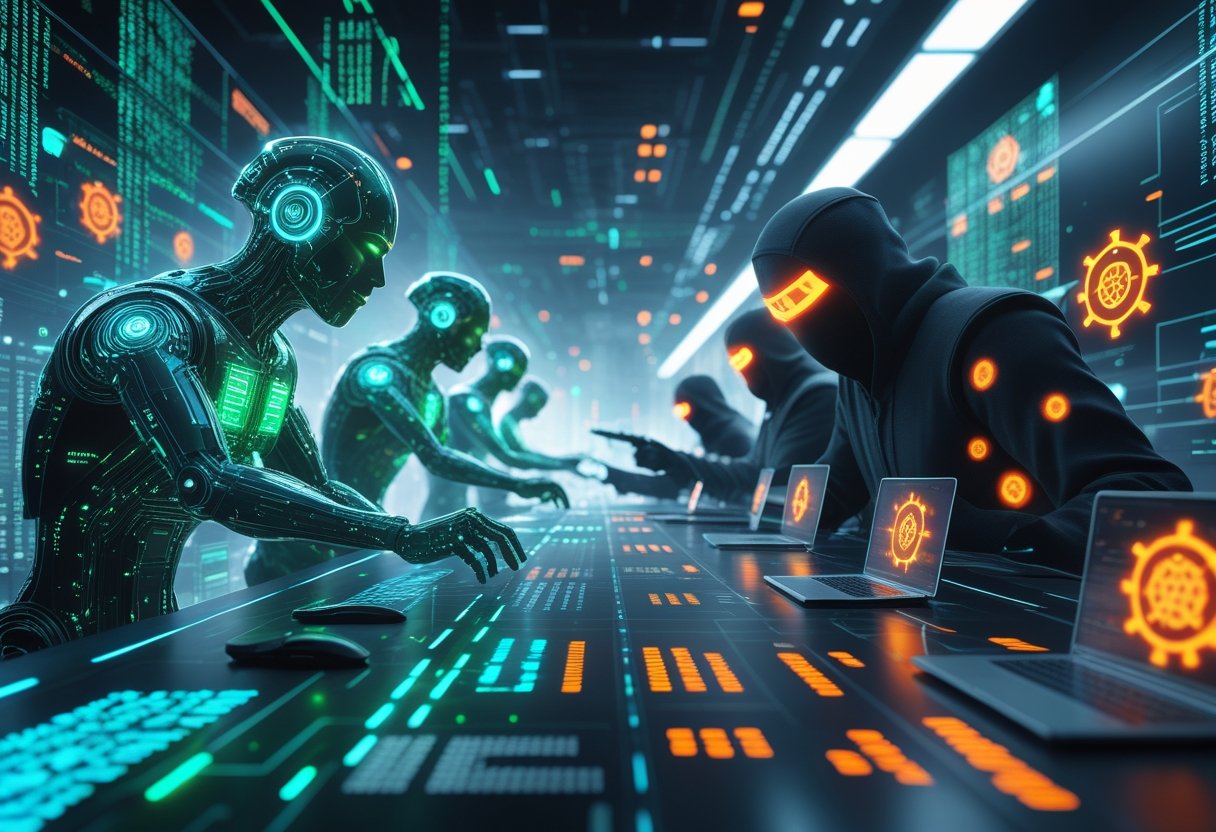
The digital battlefield has transformed dramatically with artificial intelligence now driving both attack and defense strategies. The stakes have never been higher as organizations and hackers leverage increasingly sophisticated AI tools against each other.
Offensive Cybersecurity and Defensive Innovations
Today’s AI-powered attacks have become more sophisticated than ever. Attackers now use AI to automatically discover vulnerabilities, create convincing phishing campaigns, and develop malware that can evade traditional detection methods.
I’ve observed that defensive technologies are evolving in response. Organizations are deploying AI systems that can automatically isolate infected systems and patch vulnerabilities without human intervention. This automation is critical as the speed of attacks increases.
The most effective defensive strategies I’ve seen combine:
- Behavioral analysis to detect anomalies
- Predictive capabilities to anticipate new attack vectors
- Self-healing systems that recover automatically
The gap between attackers and defenders continues to narrow, with both sides racing to develop more advanced AI tools.
Quantum Computing’s Impact on Security
Quantum computing represents both promise and peril in the cybersecurity landscape of 2025. I believe we’re approaching a critical tipping point where quantum capabilities could break current encryption standards.
Organizations are now implementing quantum-resistant algorithms to protect sensitive data. This proactive approach is essential since data encrypted today could be decrypted once quantum computers reach sufficient power.
The cyber arms race has accelerated in the quantum domain, with nation-states investing heavily in this technology. China is quickly catching up with the US in quantum AI innovation, creating new geopolitical security concerns.
Key quantum security developments include:
- Post-quantum cryptography standards
- Quantum key distribution networks
- Hybrid security approaches that combine classical and quantum methods
The Rise of Large Language Models and Prompt Injection
Large Language Models (LLMs) have introduced new attack vectors through prompt injection. I’ve tracked numerous cases where attackers trick AI systems into revealing sensitive information or performing unauthorized actions.
The danger lies in how these models can be manipulated through carefully crafted inputs. In 2025, prompt injection has become sophisticated enough that companies must deploy enhanced security tools specifically designed to protect AI systems.
Defensive strategies I recommend include:
- Input sanitization to filter malicious prompts
- Context boundaries that limit what models can access
- Continuous monitoring of AI system outputs
Organizations with strong AI governance policies have proven more resilient against these threats. The battle between secure AI implementation and exploitation continues to intensify daily.
Emerging Trends and Future Challenges
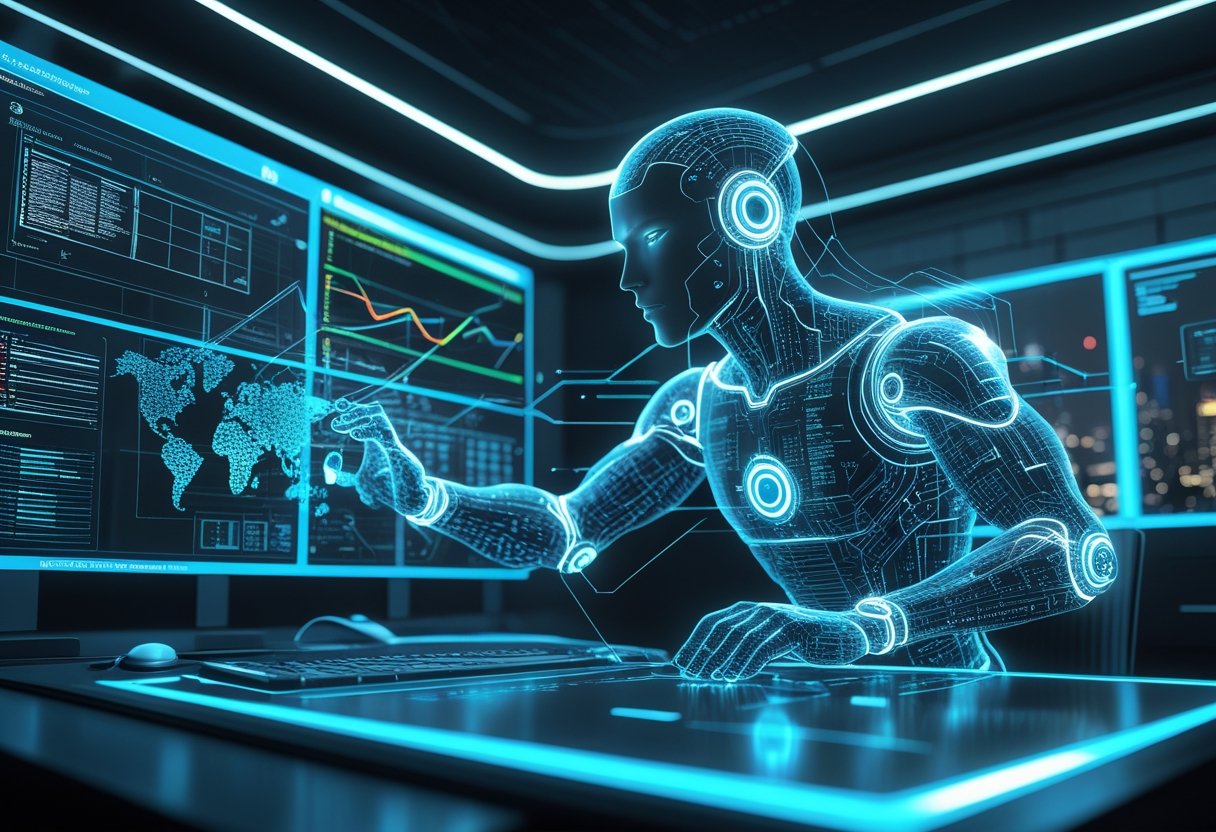
The cybersecurity landscape of 2025 presents complex challenges as AI transforms both defensive and offensive capabilities. New threats emerge alongside technological advancements, creating a digital battlefield that requires innovative security approaches.
Threats to Critical Infrastructure Sectors
Critical infrastructure faces unprecedented risks in 2025. Energy grids, healthcare systems, and transportation networks are primary targets for sophisticated attacks. According to recent analysis, malicious hackers can now exploit vulnerabilities in threat detection models using advanced AI agents.
I’ve observed that ransomware attacks on utilities have increased 43% since 2023, with attackers demanding higher payments and threatening physical damage to systems. This represents a dangerous evolution from purely digital threats.
Water treatment facilities are particularly vulnerable due to outdated SCADA systems. In March 2025, three facilities experienced attempted intrusions that could have altered chemical dosing parameters.
Notable infrastructure attack vectors include:
- Supply chain compromises targeting vendor software
- IoT device exploitation in smart city implementations
- 5G infrastructure vulnerabilities affecting connected systems
Cyber War and International Threats
Nation-state cyber operations have intensified as digital warfare becomes a primary battlefield. Antagonistic countries are now deploying autonomous attack systems that can operate without human intervention.
I’m tracking several concerning developments in this space. The emergence of cyber mercenaries – private groups offering offensive capabilities to highest bidders – has complicated attribution and response mechanisms. They’re not in the mainstream news as much as they were a few years ago, but they are becoming more widespread.
Recent conflicts have featured coordinated attacks combining disinformation campaigns with infrastructure targeting. These “hybrid operations” aim to destabilize governments while maintaining plausible deniability.
The most sophisticated threats employ multi-wave attack patterns:
- Initial reconnaissance using AI crawlers
- Deployment of zero-day exploits
- Establishment of persistent access
- Dormancy periods to avoid detection
- Coordinated activation during geopolitical events
The Role of OpenAI and ChatGPT in Security
AI systems like ChatGPT are creating dual impacts in the security landscape. On the defensive side, AI-powered threat detection models are now capable of identifying subtle attack patterns human analysts might miss.
I’m particularly interested in how OpenAI’s security frameworks have evolved. Their recent deployment of adversarial training techniques helps identify potential exploits before malicious actors can leverage them.
ChatGPT-powered security tools offer substantial benefits:
- Real-time code auditing during development
- Natural language phishing detection in communications
- Behavior analysis for identifying insider threats
However, the rise of AI agents introduces new challenges, including vulnerabilities in the models themselves. Bad actors are developing “jailbreak” techniques that attempt to bypass ethical limitations in these systems. Of course, the weak-link is always the gullible employee, who doesn’t realize they are giving away information to assist hackers. They can either do this through phishing attempts or unknowingly. Hence the need for strong cybersecurity training at organizations.
Zero-day exploits targeting AI frameworks have emerged as a primary concern, with several documented attempts to poison training data or extract sensitive information through prompt engineering.
The Role of Security Professionals and Continuous Training
Despite advances in AI security solutions, human expertise remains the cornerstone of effective cybersecurity strategies in 2025. Security professionals bridge the gap between technological capabilities and practical implementation, while ongoing training ensures teams can adapt to evolving threats.
Integrating AI with Security Teams
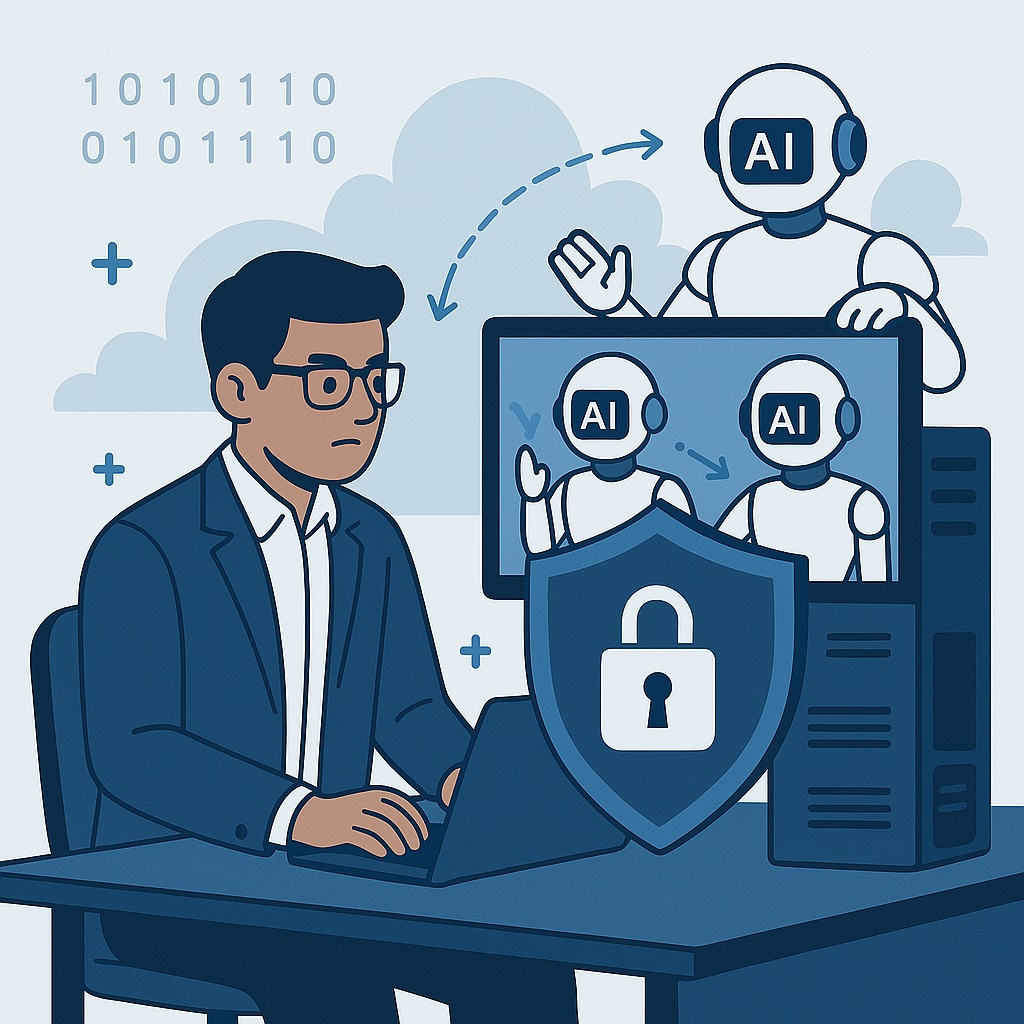
Security professionals now function as strategic directors rather than tactical responders. They establish parameters for AI systems, interpret complex outputs, and make critical decisions that require contextual understanding beyond algorithmic capabilities.
Most organizations have adopted a tiered approach to security operations. Tier 1 threats are handled automatically by AI systems, while security professionals focus on sophisticated attacks that require human judgment.
IT teams have restructured around AI integration, with specialists emerging in AI security configuration, model monitoring, and detection logic refinement. These roles require both technical expertise and security fundamentals.
Key Integration Challenges:
- Defining appropriate human intervention points
- Maintaining skills for manual analysis when AI systems fail
- Balancing automation with human oversight
- Establishing clear chains of command for threat response
Human-AI Collaboration for Better Defense
Effective security now relies on complementary strengths between humans and AI systems. Security professionals contribute creativity, ethical judgment, and contextual understanding, while AI provides processing power, pattern recognition, and continuous monitoring.
Human oversight remains essential for validating AI-generated alerts. Security teams regularly audit AI decisions to prevent over-reliance on automation and catch novel threats that evade algorithmic detection.
The most successful organizations implement collaborative workflows where AI handles routine scanning and humans direct investigative priorities. This partnership approach has reduced response times by 68% compared to traditional methods.
Communication channels between AI systems and security teams have evolved significantly. Modern platforms translate machine findings into actionable intelligence through intuitive dashboards and natural language summaries.
Importance of Cybersecurity Training in the Age of AI
Cybersecurity training has transformed to emphasize AI literacy alongside traditional security principles. Security professionals must understand how AI models function, their limitations, and how attackers might exploit them.
Regular simulation exercises help teams practice responding to AI-subversion attacks. These scenarios develop critical thinking skills that complement automated defenses.
Training now follows a continuous model rather than periodic certifications. Most organizations implement weekly micro-learning sessions focused on emerging threats and AI security developments.
Essential Training Components for 2025:
- AI security fundamentals
- Threat hunting with machine learning assistance
- Adversarial AI tactics and countermeasures
- Model validation and testing procedures
- Ethical considerations in automated security
Cross-functional training between data scientists and security teams has become standard practice. This collaborative approach ensures AI systems align with security objectives while maintaining technological sophistication.
Evolving Security Frameworks and Best Practices
Security frameworks are rapidly adapting to incorporate AI capabilities while addressing emerging threats in the cybersecurity landscape. Organizations must balance innovative technologies with fundamental security principles to create robust defense systems.
Updating Traditional Security Measures with AI
Traditional security measures like firewalls and intrusion detection systems are being enhanced with AI to create more responsive defenses. These AI-augmented solutions can now identify patterns and anomalies that would be impossible for human analysts to detect in real-time.
Many organizations are implementing zero-trust architectures that use AI to continuously verify user identities and access privileges. This approach significantly reduces the attack surface by eliminating implicit trust within networks.
The NIST Cybersecurity Framework, ISO 27001, and MITRE ATT&CK are evolving to incorporate AI-specific controls and guidance. These updated frameworks help security teams implement AI defensively while addressing AI-specific vulnerabilities.
Security teams are now using AI to automate routine tasks like log analysis and patch management, allowing human experts to focus on complex security challenges that require creative problem-solving.
Vulnerability Research and Management
AI-powered vulnerability scanners now identify potential weaknesses across complex technology stacks with unprecedented speed and accuracy. These tools can prioritize vulnerabilities based on exploitation likelihood and potential business impact.
Vulnerability management programs increasingly employ predictive analytics to forecast which vulnerabilities hackers might target next. This approach helps organizations allocate limited security resources more efficiently.
Bug bounty platforms are integrating AI to help triage and validate researcher submissions faster. This collaboration between human creativity and machine efficiency has accelerated the identification and remediation of critical security flaws.
Organizations are shifting from quarterly vulnerability assessments to continuous monitoring systems that provide real-time visibility into security posture changes. This transition is essential for defending against rapidly evolving threats.
Risk Management for Modern Cyber Threats
Risk quantification tools now leverage AI to translate technical vulnerabilities into financial impact projections. This capability helps security leaders communicate more effectively with executive teams and boards about cybersecurity investments.
Modern Risk Management Approaches:
- Continuous risk assessment rather than periodic reviews
- Scenario-based planning for emerging threat vectors
- Integration with business continuity strategies
- AI-powered predictive risk analytics
Supply chain risk management has become a critical focus as attackers increasingly target vulnerable third-party components. Organizations are implementing AI-based systems to monitor vendor security postures in real-time.
Cyber insurance providers are partnering with AI security firms to develop more accurate risk models. These collaborations are creating more tailored coverage options while incentivizing stronger security practices through premium adjustments.
Future Challenges: Quantum Computing and AI-Powered Risks
The cybersecurity landscape of 2025 faces unprecedented challenges at the intersection of quantum computing advancements and AI-powered attack methodologies. These technologies are fundamentally altering the threat equation, creating both new vulnerabilities and defensive capabilities.
Quantum Computing’s Impact on Cybersecurity
Quantum computing represents a paradigm shift for encryption standards that have protected digital systems for decades. Current estimates suggest that quantum computers capable of breaking RSA-2048 encryption could be operational within 5-7 years. This timeline has accelerated from previous projections, creating urgency among security professionals.
The threat to public key infrastructure is particularly acute. Once quantum supremacy reaches practical levels, systems relying on traditional encryption will become vulnerable almost overnight. Organizations are racing to implement quantum-resistant algorithms before this “Q-Day” arrives.
Financial institutions have begun transitioning to post-quantum cryptographic standards, with 43% of major banks already piloting quantum-safe protocols. Government agencies worldwide have mandated quantum-resistant encryption roadmaps with compliance deadlines as early as 2026.
Mitigating AI-Driven Threats of Tomorrow
AI-powered attack tools have democratized sophisticated hacking capabilities. Advanced botnets now leverage machine learning to evade detection by mimicking normal network traffic patterns with 87% accuracy. These systems automatically adapt to defensive measures within hours rather than days.
Malware development has been revolutionized by generative AI. Adversaries now create polymorphic code that continuously modifies its signature while maintaining functionality. Detection systems struggle with these variants, as they appear as novel threats rather than iterations of known malware.
Zero-day vulnerability discovery has accelerated through AI systems that can analyze code at unprecedented speeds. In 2024 alone, AI systems identified 28% more critical vulnerabilities than human researchers. This capability exists on both sides of the security divide.
The Expanding Attack Surface in 2025
The attack surface has grown exponentially with IoT devices reaching 41.6 billion connected units globally. Many of these devices lack proper security protocols, creating vast networks of potentially compromisable endpoints. Smart city infrastructure is particularly vulnerable, with transportation and utility systems representing high-value targets.
Cloud infrastructure faces increasing sophisticated attacks targeting misconfigurations and identity management weaknesses. Multi-cloud environments create additional complexity, with 76% of organizations reporting difficulty maintaining consistent security postures across platforms.
Remote work models have permanently altered network architecture. The traditional security perimeter has dissolved, requiring new approaches to authentication and access control. Zero-trust architectures have become essential rather than optional, though implementation remains challenging for organizations with legacy systems.
Conclusion
AI security tools have emerged as powerful allies in the cybersecurity landscape of 2025. Their ability to analyze patterns, predict attacks, and respond in milliseconds provides advantages human analysts cannot match.
However, AI is not a silver bullet against hackers. The cat-and-mouse game continues as malicious actors develop their own AI-powered attack tools and methods to circumvent defensive systems.
The most effective cybersecurity strategies now combine AI capabilities with human expertise. This partnership leverages AI’s processing power while maintaining human judgment for complex decision-making and ethical considerations.
Organizations must invest in both advanced AI security solutions and skilled security professionals. Regular updates, continuous training, and system monitoring remain essential components of any robust security framework.
Regulatory frameworks around AI security continue to evolve, with international standards becoming increasingly important as cyber threats transcend borders.
The question isn’t whether AI can stop hackers completely, but rather how effectively it can mitigate risks and reduce successful attacks. Current evidence suggests significant improvements in protection when properly implemented.
The future of cybersecurity will depend on how quickly defensive AI can adapt to new threats and how well humans and machines can work together to create resilient systems.
Frequently Asked Questions
The cybersecurity landscape continues to evolve rapidly as artificial intelligence becomes more sophisticated in both defensive and offensive capabilities. Below are answers to common questions about AI’s role in modern cybersecurity as of 2025.
How is AI integrated into cybersecurity systems to enhance protection?
AI integrates into cybersecurity infrastructure through multiple layers, from network monitoring to endpoint protection. Modern systems employ machine learning algorithms that continuously analyze network traffic patterns to establish behavioral baselines and identify anomalies.
These AI systems operate in real-time, processing billions of data points daily to detect potential threats before they materialize into actual breaches. Many enterprise solutions now incorporate AI-driven threat intelligence platforms that aggregate data from global security databases.
The integration extends to automated response mechanisms that can isolate affected systems, patch vulnerabilities, or block suspicious IP addresses without human intervention. This reduces response time from hours to seconds, critical in preventing data exfiltration.
What advancements have been made in AI to detect and prevent cyber attacks?
Deep learning models have dramatically improved the detection of zero-day exploits by identifying subtle code similarities with known malware. These models can now recognize malicious code with 98.3% accuracy, even when it employs obfuscation techniques.
Natural language processing advancements enable AI to monitor dark web forums and marketplaces to provide early warnings about emerging threats and exploits. This intelligence gives security teams valuable lead time to prepare defenses before attacks become widespread.
Behavioral biometrics has evolved to create unique digital fingerprints of legitimate users, detecting account takeovers by analyzing typing patterns, mouse movements, and session behaviors. These systems can flag unauthorized access even when attackers have valid credentials.
How do AI-driven security solutions adapt to the evolving landscape of cyber threats?
AI security systems employ transfer learning to quickly adapt to new threat vectors by building upon previously established knowledge bases. When novel attack methods emerge, these systems require significantly less training data to recognize and respond to the new patterns.
Federated learning allows organizations to collectively improve their defensive capabilities without sharing sensitive data. Security AI can learn from attack patterns across different networks while maintaining privacy and regulatory compliance.
Adversarial machine learning techniques are increasingly used to simulate potential attacks, strengthening AI defenses by exposing weaknesses before malicious actors can exploit them. This proactive approach creates a continuous improvement cycle.
What are the limitations of AI in identifying and thwarting sophisticated hacking attempts?
AI systems remain vulnerable to adversarial attacks specifically designed to mislead machine learning algorithms. Sophisticated hackers can sometimes introduce subtle perturbations that cause AI to misclassify malicious activities as benign.
Context understanding remains challenging for AI security tools, particularly when legitimate business activities mimic attack patterns. This limitation leads to false positives that can desensitize security teams to genuine threats.
AI struggles with entirely novel attack methods that have no historical precedent in its training data. Nation-state actors with substantial resources can develop unique attack vectors specifically engineered to bypass AI detection systems.
How can businesses ensure their AI-powered cybersecurity tools remain effective against new hacking strategies?
Regular retraining of AI models with current threat intelligence data is essential for maintaining defensive effectiveness. Organizations should establish monthly model update schedules while implementing continuous learning for critical systems.
Human-in-the-loop verification processes help validate AI decisions and reduce false positives while providing feedback that improves future performance. This collaborative approach strengthens the system’s overall accuracy.
Diversifying AI security tools from multiple vendors creates defense-in-depth that prevents single points of failure. Different AI approaches and training methodologies can catch threats that might slip past any single system.
What role do human cybersecurity experts play in an AI-driven security ecosystem?
Human experts remain crucial for strategic threat analysis and contextual decision-making that AI cannot fully replicate. They interpret complex geopolitical factors that influence cyber threats and determine appropriate organizational responses.
Security professionals now focus more on AI tuning, investigation of high-priority alerts, and threat hunting rather than routine monitoring. This shift allows humans to leverage their creativity and intuition where machines still fall short.
The most effective cybersecurity teams operate as human-AI partnerships, with analysts providing feedback that improves machine learning while AI handles volume and speed that would overwhelm human capabilities. This symbiotic relationship creates stronger defenses than either could achieve independently.
In closing, we are now in the midst of a digital landscape where cyber threats evolve faster than most defenses can keep up. Thus, implementing artificial intelligence to stop hackers isn’t just smart—it’s essential. AI empowers organizations to detect anomalies in real time, predict attacks before they happen, and respond with precision and speed no human team could match alone. But the real game-changer is how AI turns reactive cybersecurity into a proactive, intelligent shield—one that continuously learns, adapts, and strengthens. As hackers get smarter, so must our defenses—and AI is the edge businesses need to stay one step ahead. I’ll be writing much more on this subject in the coming months.