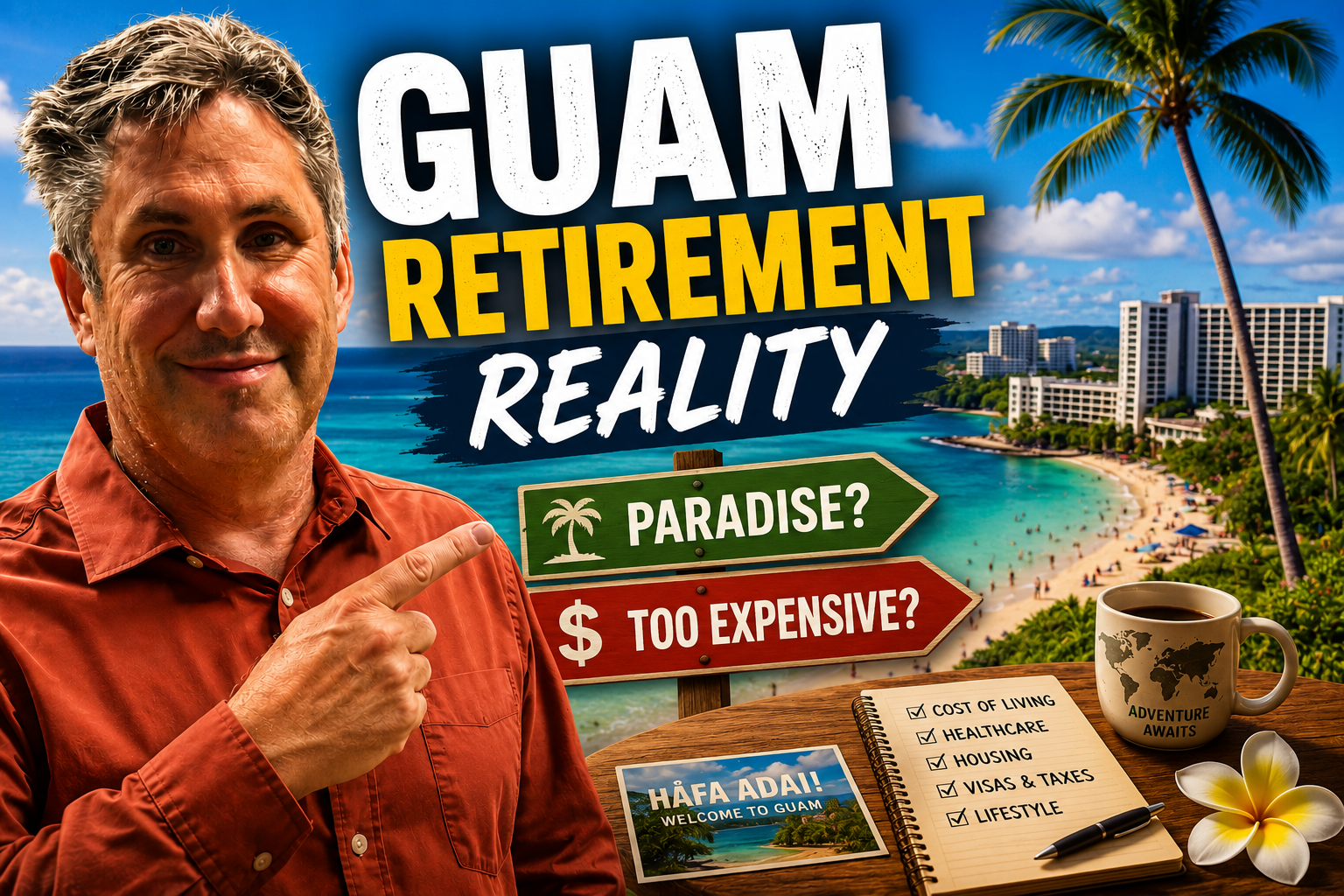
I grew up in Southern California. I am used to sun, surf, and islands. (We have Catalina Island, as well as a few others.). I’ve also been to Hawaii and several Carribean islands. I often wondered what it would be like to move to Guam. It is an American territory, after all. I would still be technically living in the United States, just on the other side of the world. Well, if you’ve ever dreamed of retiring somewhere with warm ocean breezes, palm trees, and beautiful beaches—but didn’t want the hassle of visas, exchange rates, or learning a new language—Guam has probably crossed your mind. Because it’s a U.S. territory in the western Pacific, American citizens can live and work without a passport. On paper, it sounds like the perfect compromise between retiring abroad and staying connected to the United States.
But as I’ve learned while researching retirement destinations around the world, every paradise comes with trade-offs.
The real question isn’t whether Guam is beautiful—it absolutely is. The question is whether it’s practical for your retirement goals. Can you afford the cost of living? What is healthcare really like? Are there tax advantages? And perhaps most importantly, would you actually enjoy living on an island thousands of miles from the U.S. mainland? I wrote this article, as well as the companion video below to help you understand if Guam is right for you.
Let me help you take an honest look at what retirement in Guam is really like so you can decide whether this tropical island deserves a place on your retirement shortlist.
Why Guam Is Unlike Any Other Retirement Destination
One of the biggest reasons Guam attracts American retirees is because it offers something that few destinations can match: a tropical lifestyle without leaving the United States.
Because Guam is an unincorporated U.S. territory, American citizens don’t need a passport, visa, or residency permit to move there. The U.S. dollar is the official currency, English is widely spoken alongside Chamorro, and many of the legal and financial systems will feel familiar.
That familiarity removes many of the obstacles retirees face when moving overseas. You won’t have to worry about converting currencies every month or navigating complicated immigration requirements just to stay legally in the country.
For retirees who want an island lifestyle but aren’t ready to make the leap to a foreign country, Guam offers an appealing middle ground.
Of course, that convenience doesn’t automatically make it affordable—or even the right fit for everyone. Let me explain:
A Tropical Lifestyle That Feels Like Vacation
One of Guam’s biggest selling points is its climate.
Temperatures stay warm throughout the year, generally hovering in the 80s with plenty of sunshine. If you’ve spent decades shoveling snow or enduring long winters, waking up to tropical weather every morning can feel like a permanent vacation.
Outdoor living quickly becomes part of everyday life.
Whether you enjoy snorkeling, diving, paddleboarding, fishing, hiking, or simply relaxing on the beach, Guam offers opportunities that many retirees only experience during annual vacations.
One thing I always encourage people to remember, however, is that paradise isn’t perfect.
Guam experiences a tropical climate, which means high humidity and a distinct typhoon season. While modern infrastructure is designed to withstand severe weather, storms are simply part of island life.
If you value four distinct seasons or cooler temperatures, Guam may feel too warm year-round. But if sunshine and ocean views are at the top of your retirement wish list, it’s hard to argue with what Guam has to offer.
The Reality of Guam’s Cost of Living
This is where many prospective retirees receive their first surprise.
Although Guam is part of the United States, the cost of living can actually exceed many areas on the mainland.
The biggest reason is geography.
Nearly everything sold in Guam has to be shipped across the Pacific Ocean. That means groceries, furniture, electronics, appliances, vehicles, and countless everyday necessities often cost significantly more than they do in most U.S. cities.
Housing also deserves careful consideration.
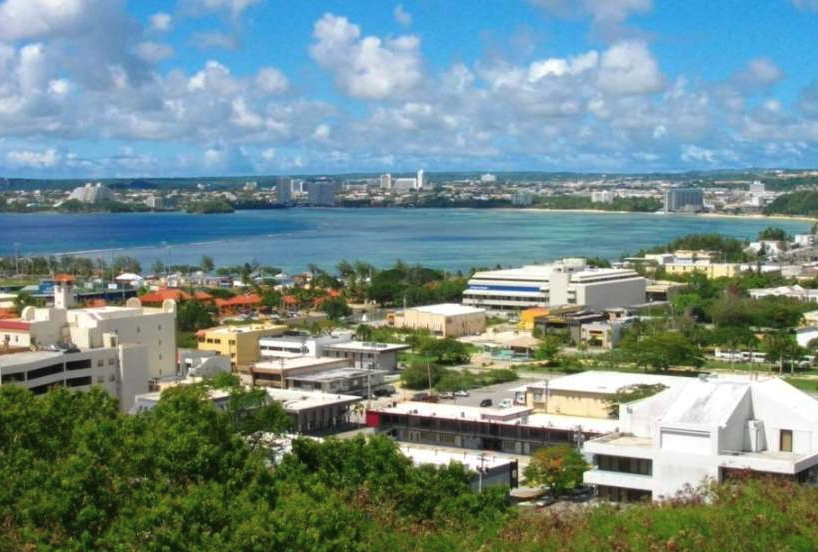
Rental prices vary depending on location, but desirable areas near the beaches and tourist districts typically command premium prices. Homeownership is certainly possible, but buyers should research neighborhoods carefully and understand local market conditions before making a purchase.
Utilities can also be higher than many retirees expect, particularly electricity, since energy costs are heavily influenced by imported fuel.
Transportation expenses are relatively straightforward. Most residents own a vehicle because public transportation is limited compared to larger metropolitan areas. Gasoline prices fluctuate, but owning a reliable car is generally considered a necessity rather than a luxury.
The good news is that Guam still offers plenty of opportunities to save money if you’re willing to adapt.
Shopping locally, enjoying fresh seafood, cooking at home, and embracing island living instead of relying on imported products can make a noticeable difference in your monthly budget.
Choosing the Right Neighborhood
Not every part of Guam offers the same lifestyle, and that’s one reason I always recommend visiting before making a permanent move. In fact, I encourage you to watch my video on how to go about testing a country before moving there. Click on the link below to find out more.
Now, I can assume you’ve selected Guam as your destination. Here’s the next big decision. Where to move. If you enjoy being close to shopping, restaurants, and medical facilities, Tamuning is one of the island’s most popular residential areas. It offers convenient access to many everyday services while still being close to the coast.
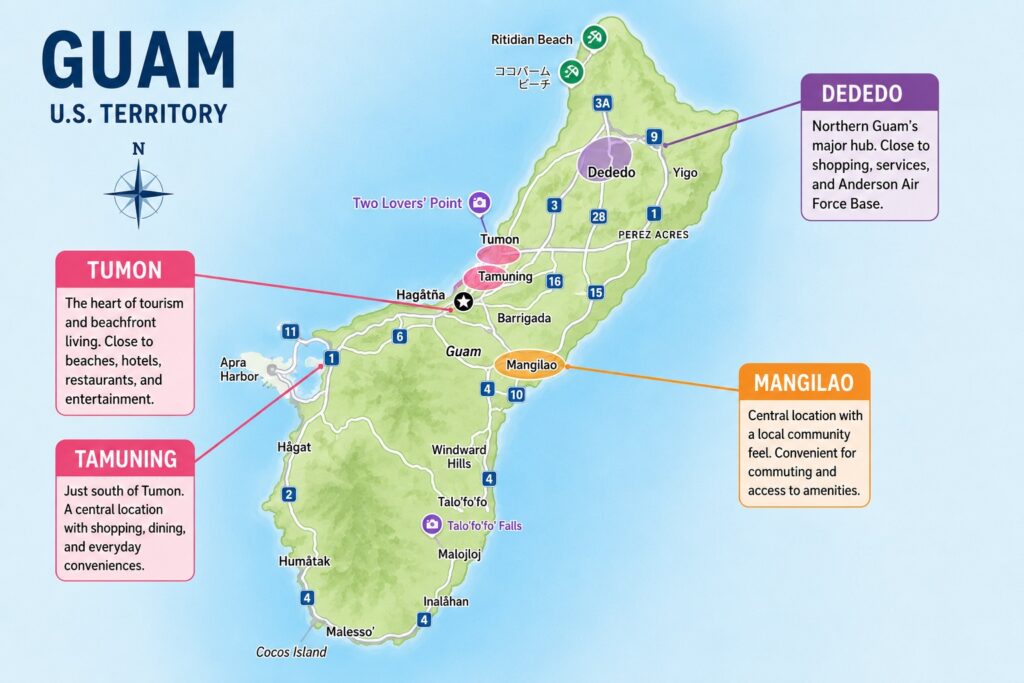
Tumon is famous for its beautiful beaches and resort atmosphere. It’s one of Guam’s most scenic areas, but it’s also one of the more expensive places to live. If you enjoy an active social scene and don’t mind paying more for location, Tumon is certainly worth considering.
Dededo, Guam’s largest village, offers a more residential feel with larger neighborhoods and a stronger sense of local community. Housing options can be more affordable than in the tourist districts while still providing easy access to shopping and services.
Mangilao offers another attractive option, particularly for retirees looking for a quieter pace of life. Home to the University of Guam, the area combines residential neighborhoods with green spaces and a more relaxed atmosphere.
The best neighborhood ultimately depends on your budget, lifestyle, and priorities.
What About Healthcare?
Healthcare is one of the most important considerations for any retiree, regardless of destination.
Guam has hospitals, medical clinics, pharmacies, and a variety of healthcare providers capable of handling routine medical needs. Many retirees receive excellent day-to-day care without significant problems.
However, there are limitations.
Because Guam is a relatively small island, highly specialized medical treatments may require travel to Hawaii or the U.S. mainland. Depending on your medical history, that’s something worth discussing with your doctor before relocating.
Medicare generally applies in Guam, and many retirees continue using their existing coverage. Private insurance and Medicare Advantage plans may also be available depending on your specific circumstances.
If you have ongoing health concerns that require frequent specialist visits, you’ll want to carefully research your options before making Guam your permanent home.
Taxes, Social Security, and Property Ownership
Many retirees wonder whether moving to Guam comes with major tax advantages.
The answer is a little more nuanced.
Guam operates its own income tax system, but it largely mirrors the U.S. Internal Revenue Code. For most retirees, this means taxes won’t be dramatically different simply because they’ve moved to the island.
Social Security benefits continue just as they would elsewhere in the United States, providing an important source of retirement income for many residents.
Property ownership is also relatively straightforward for U.S. citizens. Americans can purchase homes and real estate, although—as with any major investment—working with experienced local professionals is highly recommended.
While Guam isn’t a tax haven, it does offer the financial familiarity that many retirees appreciate.
Embracing Guam’s Culture
One of my favorite parts of researching retirement destinations is learning about local culture.
Guam’s Chamorro heritage gives the island a personality that’s very different from mainland America.
Community, hospitality, family, and tradition remain central values throughout island life. Local festivals, cultural celebrations, farmers markets, and community events provide excellent opportunities to meet people and become part of the neighborhood.
Life generally moves at a slower pace than many retirees are accustomed to.
That slower rhythm can be refreshing if you’re looking to escape traffic, deadlines, and constant stress. On the other hand, it may require some adjustment if you’re used to having endless shopping options, entertainment venues, and big-city conveniences.
Island living naturally means fewer choices—but often a higher quality of life.
Is Guam the Right Retirement Destination?
After looking at the advantages and challenges, I think Guam is best suited for a specific type of retiree.
If you love tropical weather, enjoy outdoor activities, appreciate a slower pace of life, and want to remain under the U.S. flag, Guam deserves serious consideration. Military retirees, veterans, and anyone with previous experience living on islands may find the transition especially rewarding.
On the other hand, retirees on a very tight budget may find Guam’s higher cost of living difficult to manage. Likewise, anyone who requires frequent specialized medical care or wants easy access to family across the continental United States should carefully weigh the realities of living thousands of miles away.
Like every retirement destination I cover, Guam isn’t perfect.
But perfection isn’t really the goal.
The goal is finding the place that best matches your lifestyle, finances, health needs, and long-term priorities.
For some people, Guam will feel like the tropical paradise they’ve been searching for. For others, the costs and distance from the mainland may outweigh the benefits.
Only you can decide which side of that equation matters most.
If you’re considering retiring in Guam, my advice is simple: visit first. Spend several weeks living like a local instead of a tourist. Shop at the grocery stores, drive around different neighborhoods, talk with residents, and experience everyday life beyond the beaches.
That firsthand experience will tell you far more than any article—or even any video—ever could.
And if you’re still exploring your retirement options, be sure to browse the rest of my retirement destination guides here on KaiPonte.com and watch my companion YouTube video, “Guam Retirement Reality: Paradise or Too Expensive?” My goal is to help you make informed decisions so you can retire with confidence, wherever your next chapter takes you.