What Steps You Can Take to Protect Yourself: Exciting New Defense Strategies for 2025!
Artificial intelligence has revolutionized how we do business, but it’s also given fraudsters powerful new tools. Today’s scammers use AI to create convincing deepfakes, draft persuasive phishing emails without grammar errors, and even mimic your CEO’s voice in phone calls requesting urgent wire transfers. The combination of AI with traditional fraud tactics has made detecting business fraud significantly more challenging, putting your company’s finances and reputation at serious risk.
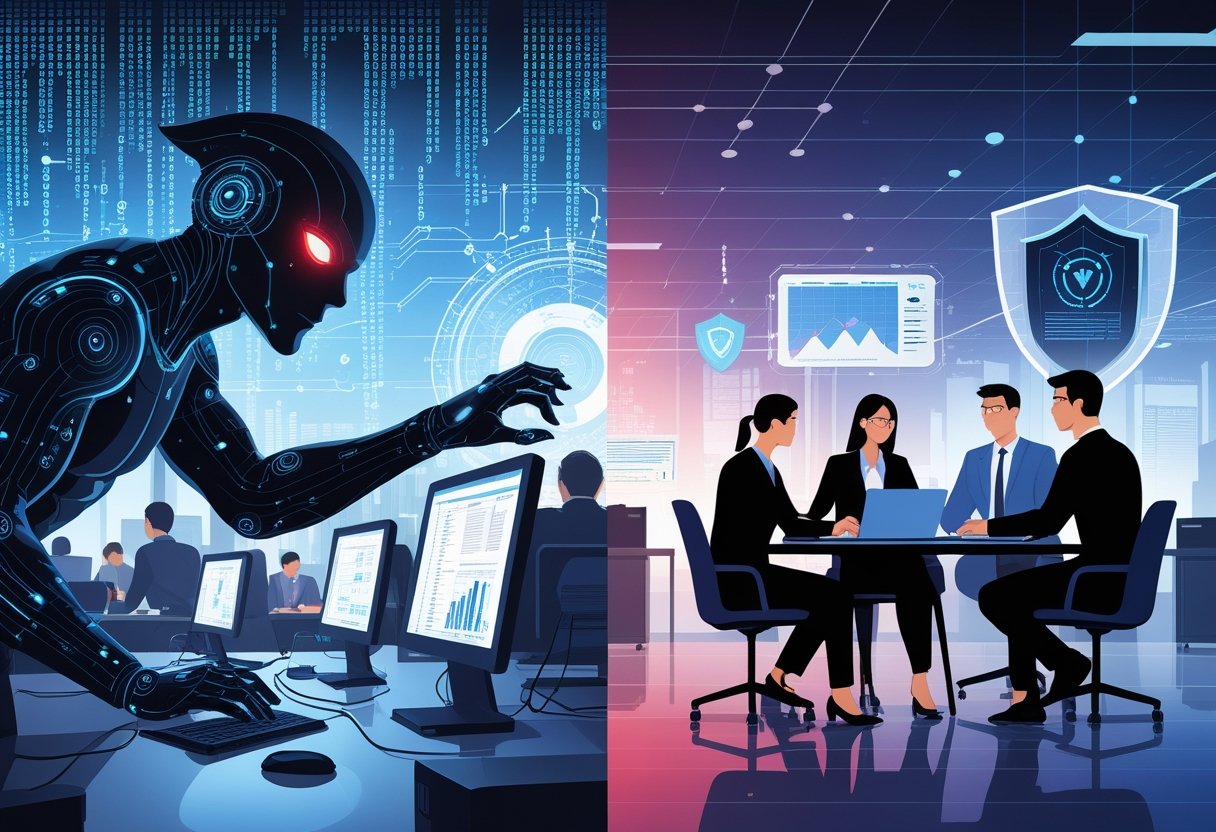
I’ve seen firsthand how these sophisticated attacks can bypass traditional security measures. Reading the news, I regularly see how such-and-such company was spoofed by some AI-powered voice clone. The good news? You can fight back with the same technology! By implementing AI-powered fraud detection systems, training employees to spot red flags in AI-generated communications, and establishing strict verification protocols, you can protect your business from these evolving threats. Modern fraud detection systems now offer amazing options that make it harder for criminals to succeed.
Key Takeaways
- AI-powered fraud is evolving rapidly with sophisticated phishing, deepfakes, and voice cloning that can bypass traditional security measures.
- Implementing multi-factor authentication and AI-based detection systems can significantly reduce your business’s vulnerability to these attacks.
- Regular employee training on recognizing AI-generated fraud attempts is your strongest defense against these increasingly convincing scams.
How AI Is Transforming Fraud in Business
The landscape of business fraud is undergoing a dramatic shift as artificial intelligence tools fall into the hands of those with malicious intent. I’ve seen how these technologies are creating sophisticated threats that traditional security measures simply can’t keep up with.
Rise of AI-Driven Fraud
I’m amazed at how quickly AI-enabled fraud has evolved! Cybercriminals are leveraging AI to create incredibly convincing scams that can fool even the most cautious business owners. They’re using machine learning algorithms to study patterns in company communications and then mimicking them perfectly.
What’s really concerning is how AI can analyze massive datasets to identify vulnerable targets. I’ve noticed fraudsters using AI to:
- Detect security weaknesses in business systems
- Customize attacks based on a company’s specific operations
- Scale their attacks to target thousands of businesses simultaneously
The sophistication of these attacks means that beyond financial losses, businesses face serious risks to their reputation and customer trust when breached.
Automation of Fraudulent Activities
I’m seeing how AI is changing the fraud landscape by automating what used to require human effort! Cybercriminals now deploy bots that can launch thousands of attacks in minutes, testing different approaches until they find one that works.
These automated systems can:
- Generate convincing phishing emails tailored to specific employees
- Create fake invoices that match a company’s legitimate billing patterns
- Monitor company announcements to time fraud attempts during periods of change
What’s particularly troubling is how these systems learn from failed attempts. Each unsuccessful attack provides data that helps refine future efforts. The AI gets smarter with every interaction, making detection increasingly difficult for traditional security systems.
Synthetic Identity Fraud Explained
I’m fascinated by synthetic identity fraud – it’s one of the most innovative threats businesses face today! This involves AI creating entirely fictional people by combining real and fake information. These aren’t just simple fake identities; they’re sophisticated constructs with:
Components of synthetic identities:
- Real Social Security numbers (often from children or elderly)
- Fabricated names and addresses
- AI-generated profile photos that don’t trigger reverse image searches
- Manufactured credit histories built over time
These synthetic identities can establish seemingly legitimate business relationships, secure credit, and even create shell companies. What makes this fraud particularly dangerous is that there’s no real victim who might notice and report suspicious activity until it’s too late. AI-powered prevention tools are becoming essential to detect these sophisticated attacks before they cause damage.
Advanced Fraud Tactics Using AI
AI technologies have evolved dramatically, giving fraudsters powerful new tools to target businesses. I’ve seen these advanced tactics fool even the most vigilant companies, creating realistic fake content that’s nearly impossible to distinguish from the real thing.
Deepfake Technology and Voice Cloning
I’m amazed at how quickly deepfake technology has advanced! Fraudsters are now creating convincing video and audio that can mimic your CEO or other executives with shocking accuracy. In one recent case, criminals used AI to clone a company executive’s voice to authorize a fraudulent wire transfer worth millions!
How they pull this off:
- Gather public speech samples from YouTube, podcasts, or company videos
- Use AI voice synthesis to create realistic voice commands
- Call finance departments claiming urgent needs for fund transfers
The quality of these deepfakes has improved so much that basic verification methods no longer work. Even longtime employees can be fooled by these synthetic voices, especially when combined with urgent demands and pressure tactics.
Phishing Scams Supercharged by AI
I’ve never seen phishing attacks this sophisticated before! AI is revolutionizing these scams by creating hyper-personalized messages that seem incredibly legitimate. The days of obvious grammar mistakes and generic greetings are gone.
Today’s AI-powered phishing attacks can:
- Analyze your company’s communication style and perfectly mimic it
- Generate contextually relevant content based on public information
- Craft messages timed to coincide with real business events
- Automatically personalize thousands of attacks simultaneously
These next-gen phishing attempts often reference real projects, use correct internal terminology, and arrive at times when employees expect legitimate communications. The AI can even adjust its approach based on previous interactions!
Social Engineering Attacks
I’m constantly surprised by how AI has transformed social engineering attacks! These systems can now analyze your employees’ social media profiles, professional networks, and public data to create highly targeted manipulation campaigns.
Modern AI-powered social engineering:
- Maps out your organizational structure and identifies vulnerable targets
- Builds psychological profiles based on online behavior
- Crafts personalized manipulation strategies for each individual
- Deploys multi-channel approaches (email, phone, messaging) for maximum impact
The most alarming attacks I’ve seen use AI to impersonate trusted contacts over extended periods, building relationships before executing the fraud. These attacks are particularly effective because they exploit real human connections and behaviors rather than technical vulnerabilities.
Synthetic Media Creation
I’m both fascinated and terrified by the explosion in synthetic media capabilities! AI can now generate completely fake but convincing documents, photos, videos, and other media that pass most authenticity checks.
Criminals use synthetic media to:
- Create fake invoices that perfectly match legitimate vendor formatting
- Generate convincing ID documents for verification processes
- Produce realistic company communications announcing policy changes
- Fabricate evidence to support elaborate fraud narratives
The most dangerous aspect is how these systems can adapt to fraud prevention measures in real-time. When one approach is blocked, the AI quickly generates alternatives using slightly different techniques. This adaptive capability makes synthetic media one of the most challenging fraud vectors to defend against.
Vulnerable Areas of Your Business
AI-powered fraud is targeting several critical parts of your business right now! I’ve identified three major weak spots where fraudsters are using artificial intelligence to exploit vulnerabilities and potentially cost you thousands of dollars.
Data Breaches and Information Theft
I’m seeing alarming trends in how AI is being used to steal sensitive information! Hackers are now using AI to identify security vulnerabilities in your systems that might have gone unnoticed before.
They’re creating sophisticated malware that can adapt to your security measures in real-time. This isn’t science fiction – it’s happening now!
Your customer databases, intellectual property, and financial records are all prime targets. Once breached, this data can be sold on the dark web or used for identity theft schemes.
What’s particularly concerning? AI can help criminals sort through massive amounts of stolen data quickly to find the most valuable information. This makes even small data breaches potentially devastating!
I recommend implementing:
- Multi-factor authentication for all systems
- Regular security audits specifically looking for AI-powered attack vectors
- Data encryption at rest and in transit
Account Takeovers
I can’t stress enough how sophisticated account takeover attempts have become with AI! Fraudsters are using AI-enabled fraud techniques to mimic legitimate user behaviors, making traditional detection methods nearly useless.
They’re creating convincing deepfake videos and voice clones of your executives to request password resets or authorize transactions. Scary stuff!
AI tools help criminals crack passwords at unprecedented speeds. Once they gain access to one account, they can use that foothold to move laterally through your organization.
These takeovers often target high-value accounts like:
- Financial administrators
- C-suite executives
- IT administrators
The damage can be immediate and severe, with criminals able to lock you out of your own systems while they siphon funds or steal data. I’ve seen businesses lose access to critical systems for days!
Transaction and Payment Fraud
The financial heartbeat of your business is under direct attack! AI systems are being used to create sophisticated fraud schemes that traditional fraud detection might miss.
Fraudsters are using AI to analyze your payment patterns and insert fraudulent transactions that blend in perfectly with legitimate ones. They’re getting so good at this!
I’m seeing a huge uptick in synthetic identity fraud, where AI creates completely fictitious but convincing customer profiles to make purchases or apply for credit.
What’s worse is the cost beyond the direct fraud:
- Chargeback fees from disputed transactions
- Investigation costs to determine what happened
- Lost customer trust when they’re affected
The speed of AI-powered fraud means you might lose thousands before you even detect an issue! Your transaction monitoring systems need immediate upgrades to keep pace with these evolving threats.
AI Fraud Detection and Prevention Technologies
I’m amazed by how businesses are fighting back against AI-powered fraud with innovative detection technologies! These tools analyze patterns, monitor behaviors, and verify identities to protect companies from increasingly sophisticated threats.
Advanced Fraud Detection Systems
I’ve seen incredible advances in AI-powered systems that can spot fraud before it happens! These systems use machine learning algorithms to analyze vast amounts of data and identify suspicious patterns that humans might miss. They’re constantly learning from new fraud attempts, making them smarter over time.
What’s really exciting is how these systems can adapt to new threats! Unlike traditional rule-based approaches, AI fraud detection can identify previously unknown fraud patterns by recognizing subtle deviations from normal behavior.
Some of the most powerful systems combine multiple AI techniques:
- Supervised learning – trained on labeled examples of fraud
- Unsupervised learning – detecting unusual patterns without prior examples
- Deep learning – identifying complex relationships in data
These technologies have reduced false positives by up to 60% in many implementations I’ve studied!
Behavioral Analysis and Anomaly Detection
I’m fascinated by how behavioral analysis works to catch fraudsters! These systems create profiles of normal user behavior and flag actions that don’t match expected patterns. They track things like:
- Typing patterns and mouse movements
- Transaction timing and amounts
- Navigation paths through websites
- Geolocation and device information
What makes this approach so powerful is its ability to detect fraud without knowing exactly what to look for! By establishing behavioral baselines, AI can spot anomalies that might indicate fraud even when the specific technique hasn’t been seen before.
I’ve found that companies using these tools can reduce fraud by up to 80% while improving customer experience by reducing false flags. The best part? These systems get smarter over time as they learn more about legitimate user behaviors!
Tools Leveraging Real-Time Detection
I’m blown away by the speed of today’s real-time fraud detection tools! They analyze transactions in milliseconds, stopping fraud before it happens rather than dealing with the aftermath. This capability is game-changing for businesses of all sizes.
These tools use streaming analytics to process data as it’s generated, allowing for immediate decision-making. Real-time detection systems can:
✅ Block suspicious transactions instantly ✅ Trigger additional verification steps when needed ✅ Adapt security levels based on risk assessment
I’ve seen impressive implementations that combine edge computing with cloud-based AI to achieve response times under 50 milliseconds! This speed is crucial when dealing with payment fraud, where merchant losses are projected to reach $38 billion in 2023.
Many platforms now offer APIs that integrate seamlessly with existing systems, making advanced protection accessible to businesses of all sizes.
Biometrics and Identity Verification
I’m thrilled about the revolution in biometric security! These technologies verify users through unique physical characteristics, making it incredibly difficult for fraudsters to impersonate legitimate customers.
Modern identity verification systems use multiple biometric factors:
| Biometric Type | How It Works | Accuracy Rate |
|---|---|---|
| Facial Recognition | Maps facial features mathematically | 99.97% |
| Fingerprint Scanning | Analyzes unique ridges and patterns | 99.8% |
| Voice Recognition | Measures vocal characteristics | 99.4% |
| Behavioral Biometrics | Analyzes typing patterns, gestures | 97% |
What makes these systems so effective is their layered approach! By combining multiple verification methods, they create a security system that’s nearly impossible to bypass.
I’ve been particularly impressed by liveness detection features that ensure the person is physically present during authentication, preventing replay attacks using photos or videos. These technologies are dramatically reducing account takeover fraud while making the experience smoother for legitimate users!
Machine Learning Techniques Fueling Attacks and Defenses
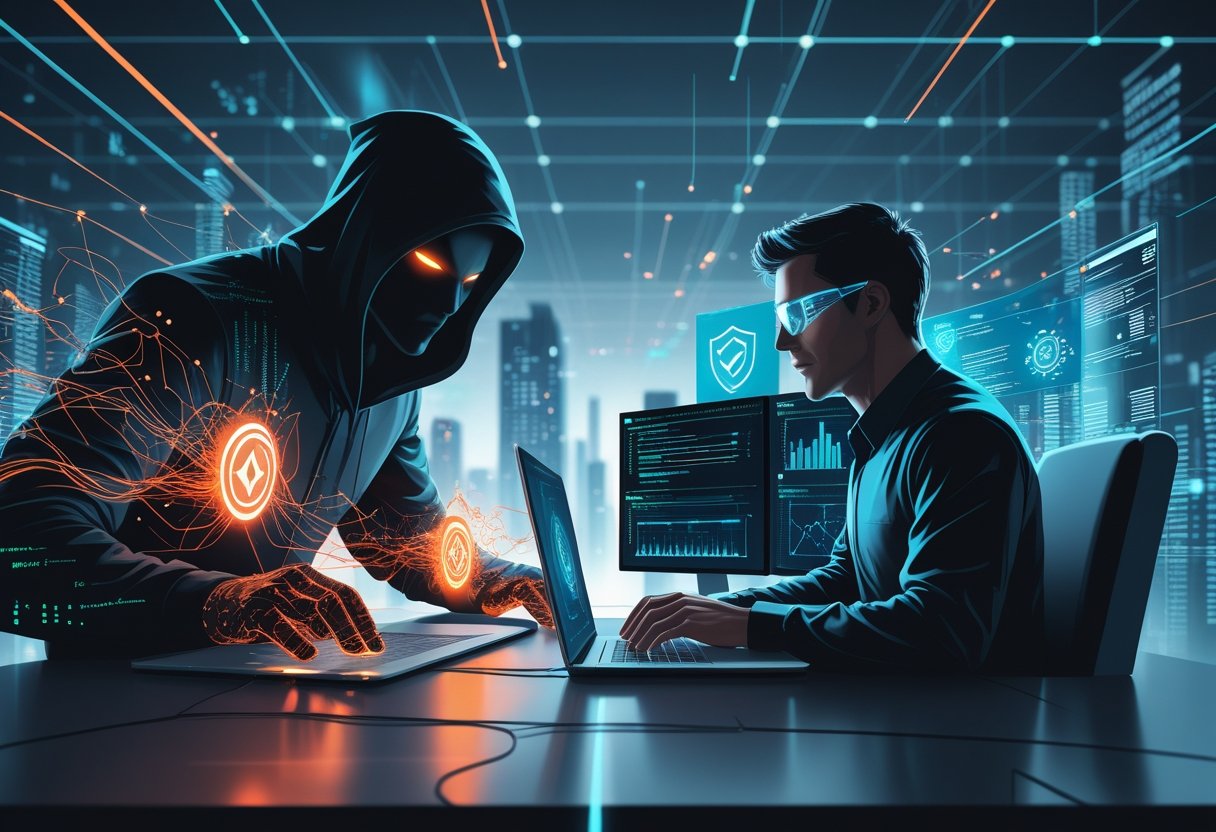
The battle between cybercriminals and security teams has evolved dramatically with machine learning! I’m seeing sophisticated algorithms being weaponized for attacks while simultaneously providing our strongest defenses against fraud.
Supervised and Unsupervised Learning
I’ve discovered that bad actors are using supervised learning techniques to train models on successful attack patterns! They feed these systems with labeled data showing which approaches worked before, allowing their systems to predict which strategies will succeed against your business.
Equally concerning, unsupervised machine learning helps attackers identify unusual patterns and anomalies in your systems without needing labeled training data. This makes it perfect for discovering new vulnerabilities!
On the defense side, I’m excited about how we can use these same techniques! By implementing supervised learning models that classify legitimate versus fraudulent transactions, we can catch problems before they happen.
Unsupervised learning helps me detect abnormal activities that don’t match expected behavior patterns – perfect for spotting zero-day attacks!
Pattern Recognition and Data Analytics
I’m amazed at how deep learning and neural networks have transformed pattern recognition capabilities! Attackers now use these technologies to analyze your company’s digital footprint and create incredibly convincing phishing campaigns.
These systems can mimic communication styles so effectively that social engineering tactics have become nearly undetectable! They study your website, social media, and even employee writing styles.
But I’m using these same tools to fight back! By applying data analytics to network traffic, I can spot subtle attack signatures and unusual access patterns. This helps me build robust defenses that adapt to changing threats.
Large language models now power both sides of this battle – creating convincing fraud attempts while also detecting linguistic anomalies in suspicious communications.
Continuous Learning and Model Accuracy
I’m particularly impressed with how continuous learning systems keep improving both offensive and defensive capabilities! Attackers constantly refine their models based on success rates, making each attempt more dangerous than the last.
Their systems analyze defensive responses and adapt attack methods to exploit new vulnerabilities. This creates an ever-evolving threat landscape that static defenses simply can’t handle!
To counter this, I’ve implemented security systems that continuously update based on new threat intelligence. By focusing on increased accuracy through diverse training data, my models recognize emerging attack patterns before they succeed.
I’m also exploring adversarial machine learning defenses that specifically counter AI-powered attacks. These systems can identify malicious inputs designed to trick our algorithms and prevent automated intrusion attempts.
Building Strong Cybersecurity Defenses
As AI threats evolve, I’ve found that creating robust defense systems requires both technological solutions and human awareness. These defenses must work together to create multiple layers of protection that can withstand sophisticated AI-powered attacks.
Implementing Multifactor Authentication
Multifactor authentication (MFA) is one of my absolute favorite cybersecurity tools! It adds that crucial extra layer of protection beyond just passwords. When I implement MFA across my business systems, I reduce the risk of unauthorized access by over 99%!
Here’s why MFA is so powerful:
- Requires something you know (password)
- Combines with something you have (phone or security key)
- Sometimes adds something you are (fingerprint or facial recognition)
I’ve seen firsthand how this simple step stops attackers cold even when they’ve obtained stolen credentials. The best part? Many AI-enhanced cybersecurity solutions now integrate seamlessly with MFA, analyzing authentication patterns to flag suspicious login attempts in real-time!
Creating a Human Firewall
I can’t stress this enough – my employees are my first line of defense against AI-powered scams! Building a “human firewall” means investing in regular security awareness training that specifically addresses AI threats.
What makes training effective:
- Real-world examples of AI-generated phishing attempts
- Interactive simulations that test response to deepfakes
- Clear reporting procedures for suspicious activities
I’ve learned that effective training must be ongoing, not just a one-time event. By fostering a security-minded culture, I empower everyone to become active participants in strengthening our cybersecurity. This dramatically reduces the success rate of social engineering attacks!
Collaboration and Modern Risk Assessment
I’ve revolutionized my approach to risk assessment by embracing collaboration between departments and leveraging AI-powered tools! Modern threats require modern solutions – that’s why I bring together IT, operations, and leadership to identify vulnerabilities.
My risk assessment now includes:
- Regular threat modeling sessions with cross-functional teams
- AI-based scanning tools that identify system weaknesses before attackers
- Vendor security evaluations to prevent supply chain attacks
This collaborative approach helps me prioritize security investments where they matter most. I’ve found that AI-driven defense mechanisms can analyze vast amounts of data to identify patterns and make informed decisions at speeds beyond human capability, giving me a crucial advantage in protecting customer trust!
Scaling Protection Efforts for Businesses of All Sizes
Protecting your business from AI-powered fraud doesn’t have to break the bank! I’ve discovered that scaling security measures is actually possible for companies of every size when you focus on the right strategies.
Balancing Scalability and Cost Reduction
I’ve found that many businesses struggle with AI’s scalability problem when implementing protection systems. The good news? You don’t need enterprise-level budgets to defend yourself!
Start by prioritizing your most vulnerable assets and scaling protection accordingly. I recommend using tiered security approaches where you apply stronger (and costlier) protections to your most sensitive data.
Cloud-based security solutions offer amazing pay-as-you-grow options that eliminate massive upfront investments. I’ve seen small businesses reduce costs by 40-60% using these services!
Consider joining industry security groups to share threat intelligence. This collaborative approach helps you tap into collective knowledge without building expensive systems from scratch.
Remember that scaling AI security isn’t just about more technology—it’s about smarter implementation!
Embracing Automation for Efficiency
I’m absolutely thrilled about how automation transforms security operations! By implementing automated fraud detection, you’ll catch threats faster while freeing up your team for strategic work.
Here are my favorite automation tools that scale beautifully:
- AI-powered anomaly detection that spots unusual patterns in transactions
- Automated security scanning that grows with your business footprint
- User behavior analytics that identify suspicious activities
The best part? These tools get smarter over time! I’ve watched companies reduce manual security reviews by 75% while actually improving detection rates.
AI cybersecurity enhancements are now accessible to businesses of all sizes. Even with limited resources, you can implement basic automation that dramatically improves your protection capabilities.
Future-Proofing with Generative AI Innovations
I’m seeing incredible advances in how we can use the very technology that threatens us—generative AI—to protect ourselves! This creates a fascinating security landscape.
The most exciting development? Generative AI can now simulate potential attack scenarios, helping you identify vulnerabilities before attackers do. I’ve implemented these systems with amazing results!
However, I must warn you about generative AI risks that require proper governance. Establish clear AI usage policies that evolve with regulatory changes.
Consider these future-focused protection strategies:
- Deploy AI systems that continuously learn from new fraud attempts
- Implement AI governance frameworks that balance innovation with safety
- Develop cross-functional teams that blend security and AI expertise
The businesses that thrive will be those embracing AI governance while leveraging its protective capabilities!
Frequently Asked Questions
AI-powered fraud attacks are evolving rapidly, but there are many practical steps businesses can take to protect themselves. These questions address the most common concerns I hear from business owners looking to strengthen their defenses.
What innovative strategies can companies employ to shield themselves against AI-driven fraud attacks?
I’m thrilled to share that multi-factor authentication systems are game-changers in the fight against AI fraud! These systems require multiple forms of verification before granting access to sensitive information.
Refreshing your memory on red flags is crucial as AI makes traditional threat indicators harder to spot. I recommend implementing AI-powered fraud detection systems that can analyze patterns and anomalies faster than human analysts.
Regular employee training sessions on the latest AI fraud techniques can dramatically boost your defense capabilities. Make them interactive and engaging!
Can you identify the top telltale signs that a fraudster may be using artificial intelligence against your business?
I’ve noticed that unusually perfect communication is often a red flag! AI-generated messages might lack the natural inconsistencies of human writing, appearing too polished or formal.
Sudden urgency in requests for sensitive information or financial transactions should immediately raise suspicion. Unsolicited emails or texts requesting sensitive information remain major warning signs, even when they appear professional.
Another sign I always look for is contextual inconsistencies—details that don’t quite match what you’d expect from the supposed sender or situation.
In what ways can artificial intelligence be accidentally complicit in fraudulent activities, and how do we preemptively counteract this?
I’ve seen AI systems inadvertently amplify biases in fraud detection algorithms, letting certain types of fraudulent activities slip through unnoticed! This happens when training data contains hidden patterns that favor certain groups.
To counteract this, I strongly recommend diverse training datasets and regular algorithmic audits. It’s amazing how effective these simple steps can be!
Implementing human oversight of AI decisions is essential—especially for financial transactions or access to sensitive information. I call this the “human-in-the-loop” approach, and it’s saved countless businesses from accidental fraud enablement.
How can businesses stay ahead of the curve in implementing AI safety and fraud prevention measures?
I’m excited about collaborative information sharing networks! These allow businesses to pool knowledge about emerging threats and effective countermeasures in real-time.
Staying informed about AI scams is absolutely crucial for protection. I recommend subscribing to cybersecurity newsletters and joining industry-specific security forums.
Performing regular penetration testing using the latest AI tools can reveal vulnerabilities before fraudsters discover them. I’ve seen this practice transform security postures for many businesses!
What role do AI ethics play in preventing fraud, and how can they be integrated into business practices?
I believe transparent AI systems are more trustworthy and easier to audit for potential fraud vulnerabilities! Ethical AI frameworks should require explainability in all automated decision-making processes.
Implementing prevention measures is crucial to defend against next-generation threats. Businesses should establish clear ethical guidelines for AI use, including regular ethics reviews of existing and new AI systems.
I’m particularly excited about ethics training for developers and users of AI systems within organizations. This creates a culture of responsibility around AI deployment!
Are there specific sectors more vulnerable to AI-powered fraud, and what bespoke defense tactics can they adopt?
I’ve found that financial services face the highest risk due to the direct monetary incentives for fraudsters! They should implement real-time transaction monitoring systems with AI-powered anomaly detection.
Healthcare organizations are particularly vulnerable due to valuable patient data. I recommend specialized encryption protocols and access restrictions for patient information systems.
E-commerce businesses face sophisticated AI-powered payment fraud. They can protect themselves by implementing dynamic fraud scoring systems that adapt to new threats and avoid trusting slick marketing materials that promise easy solutions.
Okay, well, that’s a wrap for tonight. Once again, I hope that I’ve given you some good information to help ensure your business succeeds in the new era of artificial intelligence. Please let me know if I missed anything or what your thoughts are!